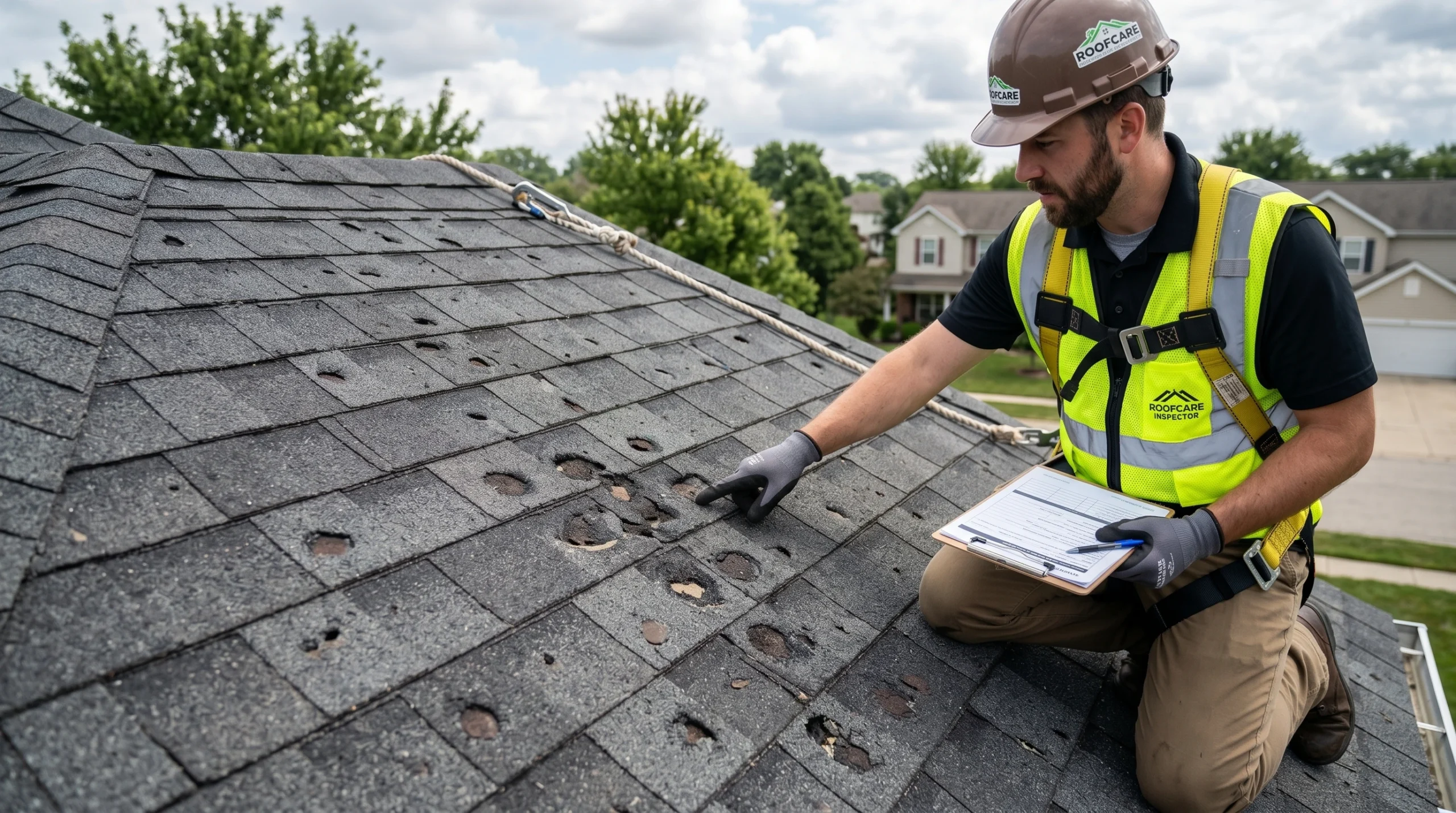
The storms that roll through Middle Tennessee in the spring are legendary, but they often leave behind a parting gift that homeowners hate: hail damage on roof surfaces. While a major storm makes it obvious that your property has been hit, hail damage is notoriously deceptive, often hiding as small bruises that lead to silent leaks. These leaks can rot your decking and ruin your insulation long before you ever see a drip from your ceiling. In this guide, we’re going to walk you through exactly how to spot the signs of hail impact, why waiting to fix it is a financial mistake, and the specific steps you should take to protect your home’s value.
The Reality of Hail Damage: It’s Not Always Obvious
When most people think of roof damage, they imagine gaping holes or missing sections. With hail, the damage is often structural rather than cosmetic. High-velocity ice hits your shingles and compresses the fiberglass mat underneath.
Even if the shingle looks okay, the protective granules are knocked loose. These granules are your roof’s primary defense against UV rays. According to Consumer Reports roofing guides, these granules are vital for UV protection; without them, the asphalt layer underneath bakes in the Tennessee sun, becomes brittle, and eventually cracks, leading to water intrusion.
Why Middle Tennessee Homes are at Risk
Our region is a hotspot for convective storms. Because of our humidity and fluctuating temperatures, we often see hail ranging from pea-sized to golf-ball-sized. While smaller hail might seem harmless, repeated strikes over a 20-minute storm can take five to ten years off the lifespan of a standard 30-year shingle. You can track recent local storm patterns via the National Weather Service (NWS) to see if your specific area in Middle Tennessee was in the direct path of a severe cell.
How to Identify Hail Damage On Roof: 3 Essential Checkpoints
You don’t need to be a professional roofer to find the first signs of trouble. In fact, for safety reasons, we recommend starting your inspection from the ground.
1. Check the Soft Metals First
Roofing professionals always look at the soft metals before the shingles because metal doesn’t lie. Check these areas:
- Gutters and Downspouts: Look for small dings or dents. If your metal gutters have “dimples,” your shingles definitely took a hit.
- Roof Vents and Flashing: Box vents and chimney flashing are usually made of thin aluminum or galvanized steel. Hail hits will leave clear, circular indentations here.
- Window Trims and AC Units: Check the fins on your outdoor AC unit. If they are flattened or dented, it’s a sign of high-impact hail.
2. Inspect Your Gutters for Granules
If you clean your gutters after a storm and find what looks like “large amounts of black sand,” that is a major red flag. Those are the protective granules from your shingles. If they are in the gutter, they aren’t on your roof protecting your home.
3. Identify Shingle Bruising
If you do safely look at the roof surface (or have a professional take photos), you are looking for “bruises”:
- The Touch Test: A hail hit often looks like a dark spot where granules are missing. If you press on it and it feels soft—similar to the skin of a bruised apple—the underlying mat is fractured.
- Circular Cracks: Sometimes hail creates a “half-moon” or circular crack in the shingle surface.
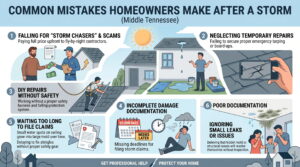
Common Mistakes Homeowners Make After a Storm
Over the years serving the Middle Tennessee community, we’ve seen homeowners lose thousands of dollars because of a few common misconceptions.
- Waiting for a Leak to Call a Pro: A roof can be “totaled” by hail and not leak for another two years. By the time it starts leaking, your insurance claim window may have closed, leaving you to pay for a full replacement out of pocket.
- Hiring “Storm Chasers”: After a big storm, out-of-state contractors often flood Nashville and surrounding areas. Always work with a local Expert Residential Roofing Service that has a permanent physical address in the area.
- Filing a Claim for Minor Damage: Not every hail strike requires a full replacement. Filing a claim unnecessarily can sometimes cause your premiums to rise without providing a payout. This is why a professional pre-inspection is vital.
Practical Decision Considerations: Repair or Replace?
If you’ve identified damage, you’re likely wondering if you can just patch it. Here is how we evaluate the situation at Veteran Roofing Systems:
- The Age of the Roof: If your roof is 15+ years old and has widespread hail hits, a repair is usually a “band-aid” because the surrounding shingles will be too brittle to manipulate.
- Density of Hits: Insurance adjusters usually look for a specific number of hits (usually 8-10) within a “square” (a 10×10 foot area).
- Commercial Considerations: Commercial properties often have flat roofs where hail damage might look like “stars” or punctures. If you manage a facility, you may need specialized Commercial Flat Roof Repair to ensure the thermal seal isn’t compromised.
Expert Best Practices for Post-Storm Recovery
- Document Everything: Take photos of the hail in your yard next to a ruler or a coin for scale.
- Save Your Samples: If you find large hail stones, keep a few in your freezer to help adjusters confirm the severity of the storm.
- Check the Attic: After a heavy rain following a hail storm, go into your attic with a flashlight to look for water stains on the rafters.
- Prioritize Emergency Tarping: If you have visible punctures, get an emergency tarp installed immediately to “mitigate damage,” which is a requirement in almost every insurance policy.
Real-World Scenario: The Hidden Damage Case
We recently inspected a home in Columbia, TN, where the roof looked perfect from the ground. However, upon inspection, we found that the hail had hit the ridge vents so hard they had cracked, allowing wind-driven rain to soak the ridge beam. Because we caught it early, we were able to facilitate a claim that covered the entire roof, saving the homeowner $14,000 in future structural repairs.
For business owners, a compromised roof can lead to inventory loss, making it essential to partner with a Premier Commercial Roofing Company that understands the nuances of large-scale insurance claims and Commercial Roof Replacement Systems.
Industry Insights: Understanding Hail Severity
For more technical data on how hail affects different building materials, you can review the IBHS Hail Impact Research Standards on material durability and impact resistance.
Frequently Asked Questions (FAQ)
How big does hail have to be to damage a roof? Generally, hail that is 1 inch (quarter-sized) or larger is capable of damaging asphalt shingles, though high winds can cause significant granule loss with even smaller hail.
My neighbors are getting new roofs, but mine looks fine. Should I be worried? Yes. Hail is localized, and damage is often less visible on certain shingle colors or brands; it is always worth a free inspection to be sure.
How long do I have to file an insurance claim for hail? Most insurance policies require you to file a claim within 1 year of the “date of loss” (the storm date).
Will my insurance rates go up if I file a hail damage claim? Hail is considered an “Act of Nature.” In Tennessee, insurance companies are generally prohibited from raising your individual rates specifically because of a weather-related claim.
Can I just wait until next year to fix the hail damage? Waiting is risky as damage gets worse with exposure to sun and rain, potentially leading to wood rot, mold, and a denied insurance claim due to neglect.
Don’t Leave Your Roof to Chance
If you suspect your home has been hit, don’t wait for the first brown stain to appear on your ceiling. At Veteran Roofing Systems, we provide honest, thorough inspections for homeowners and businesses across Middle Tennessee.
Protect your biggest investment today.
Get Your Free Storm Damage Inspection & Quote Online Today!
Final Thoughts
Knowing how to identify hail damage on your roof can save you from costly repairs and unexpected stress. The signs are not always obvious, but they are there if you know what to look for.
Homeowners in Middle Tennessee face frequent storm risks, so staying proactive is key. Whether it is a minor repair or a larger issue, early action always leads to better outcomes.
If you suspect damage or want peace of mind, getting a professional inspection is the smartest next step.
Call Us Now: 931-225-9987

Asphalt Shingle Roofing Types: Which One Actually Survives a Middle Tennessee Storm Season?
Every spring we get the same call from homeowners across Maury and Williamson counties. A storm rolls through overnight, and […]
How Roof Condition Affects Home Resale Value in Columbia, TN
Understanding how roof condition affects home resale value in Columbia TN can change the entire timing and pricing strategy behind […]
Read More… from How Roof Condition Affects Home Resale Value in Columbia, TN

How Often Should You Replace Your Roof in Spring Hill, TN?
If you own a home in Spring Hill, one question eventually comes up: how often should you replace your roof, […]
Read More… from How Often Should You Replace Your Roof in Spring Hill, TN?