Roof problems that fail a home inspection can delay your closing, weaken your price, or even end a sale. If you plan to sell in Tennessee, a few smart repairs before you list can protect your deal. In this guide, you will learn what inspectors flag, why it matters, and how to get ahead of it.
Quick Answer: What Roof Problems Fail a Home Inspection?
The roof problems that fail a home inspection most often include active leaks, missing or damaged shingles, failed flashing, sagging decking, and water stains or wet insulation in the attic. Inspectors may also flag a roof near the end of its life. Fix these issues before you list, and call a roofer if you are unsure.
Does a Roof Really Fail a Home Inspection?
Strictly speaking, a home inspection is not a pass or fail test. Instead, the inspector reviews the home and writes a report of defects and concerns. However, buyers read that report closely, and roof findings often drive the biggest conversations.
As a result, a serious roof finding can lead a buyer to ask for repairs, request a credit, or reconsider the purchase. In addition, lenders and insurance companies may care about the condition of the roof. Therefore, ask your real estate agent how roof findings could affect your sale.
Common Roof Problems Inspectors Flag
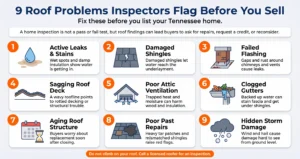
Inspectors examine the roof surface, the roof edges, and the attic. They look for signs of damage, wear, and water entry. These are the issues that raise the most concern.
Active Leaks and Water Stains
Water stains on ceilings, wet spots in the attic, and damp insulation show that water is getting in. Inspectors take these signs seriously because hidden moisture can damage decking, framing, and insulation. Moreover, buyers worry about mold and ongoing repairs. The U.S. Department of Energy’s durable attics guide lists wet insulation, mold or mildew, and warped wood as signs of attic moisture.
Missing, Cracked, or Curling Shingles
Shingles protect your roof from rain and wind. When they crack, curl, or go missing, water can reach the underlayment. In addition, heavy granule loss can show that shingles are wearing out. Fix these issues before listing, because inspectors can spot and photograph them easily.
Damaged or Failed Flashing
Flashing seals the joints around chimneys, vents, skylights, and walls. Rust, gaps, and old sealant let water slip inside. As a result, flashing problems often cause leaks even when the shingles look fine.
Sagging Roof Deck or Uneven Rooflines
A sagging or wavy roof can point to rotted decking, trapped moisture, or structural trouble. Inspectors often recommend a deeper evaluation for these findings. Because structural concerns worry buyers, address them early with a licensed roofer.
Poor Attic Ventilation
Weak airflow traps heat and moisture in the attic. Over time, that moisture can harm wood and insulation and shorten the life of your shingles. Keep soffit and roof vents clear. For background, ENERGY STAR explains how attic ventilation works with sealing and insulation.
Clogged or Damaged Gutters
Gutters guide water away from the roof edge and the foundation. Loose, sagging, or clogged gutters can cause water to back up under shingles and stain fascia boards. Clean them and secure loose sections before the inspection.
A Roof Near the End of Its Life
Age matters. An inspector may note that a roof is near the end of its expected service life, even when it does not leak today. Then buyers wonder about replacement soon after closing. Keep records of past repairs, warranties, and roof work so buyers can see the full history.
Poor Past Repairs
Heavy tar patches, mismatched shingles, and exposed nails suggest rushed work. They can also hide larger issues. Instead of patching the surface, have a roofer fix the cause.
Storm Damage
Tennessee storms bring strong winds, hail, and falling limbs. Damaged shingles, dents, or punctures may not show from the yard. Therefore, check your roof after severe weather, and document any damage for your insurance company.
Why Tennessee Weather Makes Early Roof Checks Smart
Middle Tennessee roofs face hot summers, heavy rain, strong storms, and freezing winter nights. These swings make roofing materials expand and contract. As a result, older shingles can wear faster. Therefore, check your roof before you list, not after a buyer’s inspector finds the problem.
What Sellers Should Do Before Listing
Follow these steps in order. Each one helps you avoid surprises during the buyer’s inspection.
- Walk the property. Look from the ground for missing shingles, sagging areas, and debris after a dry day.
- Check the attic. Look for stains, damp insulation, daylight through the roof, and musty smells.
- Clean the gutters. Clear leaves and debris from gutters and downspouts.
- Gather your records. Collect receipts, warranties, permits, and past inspection reports.
- Schedule a professional roof inspection. A licensed roofer can find problems that you cannot see from the ground.
- Fix known issues first. Repair leaks, flashing, and damaged shingles before photos and showings.
- Talk with your agent about disclosure. Tennessee law requires sellers of most residential properties to provide a written disclosure about the condition of the property, so ask how to describe the roof accurately.
Repair or Replace Before Selling?
Not every roof needs replacement. Minor issues like a few damaged shingles or worn flashing usually call for repairs. However, widespread wear, repeated leaks, or damaged decking may point to a bigger solution. A licensed roofer can explain both options and show you photos of what they find.
To see how roof condition shapes buyer interest and value, read our guide on roof condition and home resale value in Columbia, TN.
Tips for Realtors and Buyers
Realtors often suggest a roof evaluation early in the process. Early findings give sellers time to fix problems and keep the deal on track. Buyers should move quickly as well. The Consumer Financial Protection Bureau advises that you schedule a home inspection soon after choosing a home, so you have plenty of time to resolve problems.
- Ask for photos and written findings from the roofer.
- Ask whether the roof has useful life left.
- Request a roofer’s opinion on any flagged concern.
- Keep repair details with your contract paperwork.
Realtors can also send clients to Veteran Roofing Systems for a clear, plain-language roof evaluation. Our veteran-owned, licensed, and insured team serves Middle Tennessee homeowners, buyers, and sellers. Ready to start? Request a free estimate today.
Common Mistakes Sellers Make
Sellers often rush before listing. As a result, small errors turn into bigger problems. Avoid these mistakes:
- Ignoring small stains. A small spot can signal a larger leak.
- Covering problems with paint. Inspectors look for the source, not just the surface.
- Using quick patches. Heavy tar and mismatched materials draw attention.
- Skipping paperwork. Missing records make buyers nervous.
- Waiting for the buyer’s inspector. Early repairs give you more control.
- Climbing on the roof alone. Falls cause serious injuries, so call a professional.
- Hiding known issues. Honest disclosure protects you.
Frequently Asked Questions About Roofs and Home Inspections
Will a small roof leak kill my home sale?
Not necessarily, but it can slow things down. Buyers worry that a small leak hides bigger damage. Fix the source of the leak, dry the area, and keep the repair records to show buyers.
Does a roof warranty help if the inspector flags my roof?
It can help, but read the terms first. Some warranties limit coverage or change after a sale. Share the paperwork with your agent so buyers know what protection exists.
Do I have to replace my roof before I sell my house?
No, not always. Many roofs only need targeted repairs. A licensed roofer can tell you whether repair or replacement makes more sense for your home.
How old is too old for a roof when selling?
There is no single age that works for every roof. Inspectors look at condition, material, and signs of wear, not just the date. A well-kept older roof can look better than a neglected newer one.
Should I fix roof issues myself before the inspection?
You can clean gutters and clear debris from the ground. However, leave roof repairs to a licensed roofer. Climbing a roof is risky, and poor DIY patches can raise red flags for inspectors.
Can I sell my house as is with roof problems?
Often, yes, but you still need to follow Tennessee disclosure rules. Ask your real estate agent how to describe the roof honestly. Expect buyers to ask for a lower price or repairs.
Do Not Let Roof Issues Derail Your Sale
Roof problems that fail a home inspection are easier to fix before you list than during a deadline. Get a clear picture of your roof today. Call Veteran Roofing Systems at (931) 391-3186 or request your free estimate now. Sell with confidence, and let a trusted, veteran-owned team handle the roof.
Why Attic Ventilation Matters More Than You Think in Columbia, TN
Attic ventilation in Columbia TN, rarely gets attention until a roof starts failing years earlier than expected. Most homeowners focus […]
Read More… from Why Attic Ventilation Matters More Than You Think in Columbia, TN

Storm Damage Roof Repair Contractors | Veteran Roofing Systems
Storms can be unpredictable and destructive, causing significant damage to roofs—ranging from missing shingles to structural compromise. Roof damage left […]
Read More… from Storm Damage Roof Repair Contractors | Veteran Roofing Systems

Standing Seam Metal Roofing: The Ultimate Investment in Commercial Longevity
Introduction When you compare commercial roofing systems, few options match the lifespan, strength, and style of a Standing Seam Metal […]
Read More… from Standing Seam Metal Roofing: The Ultimate Investment in Commercial Longevity