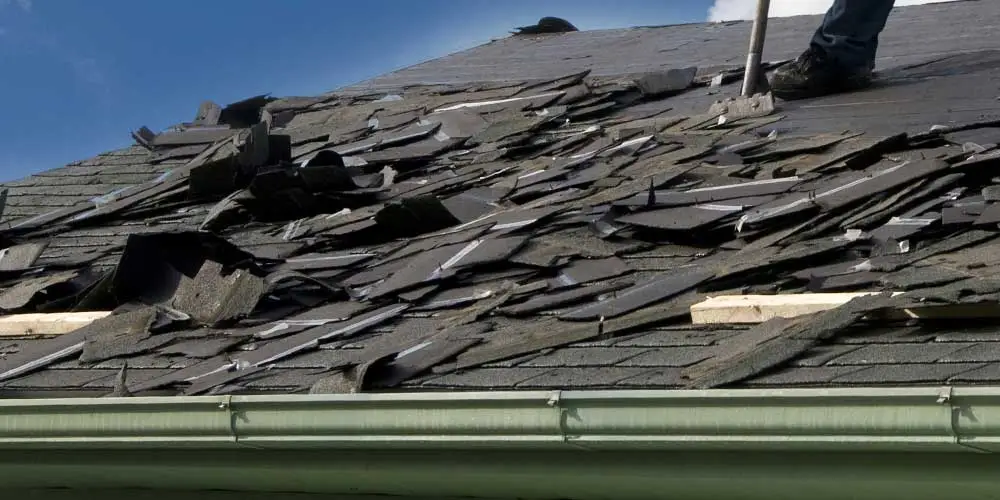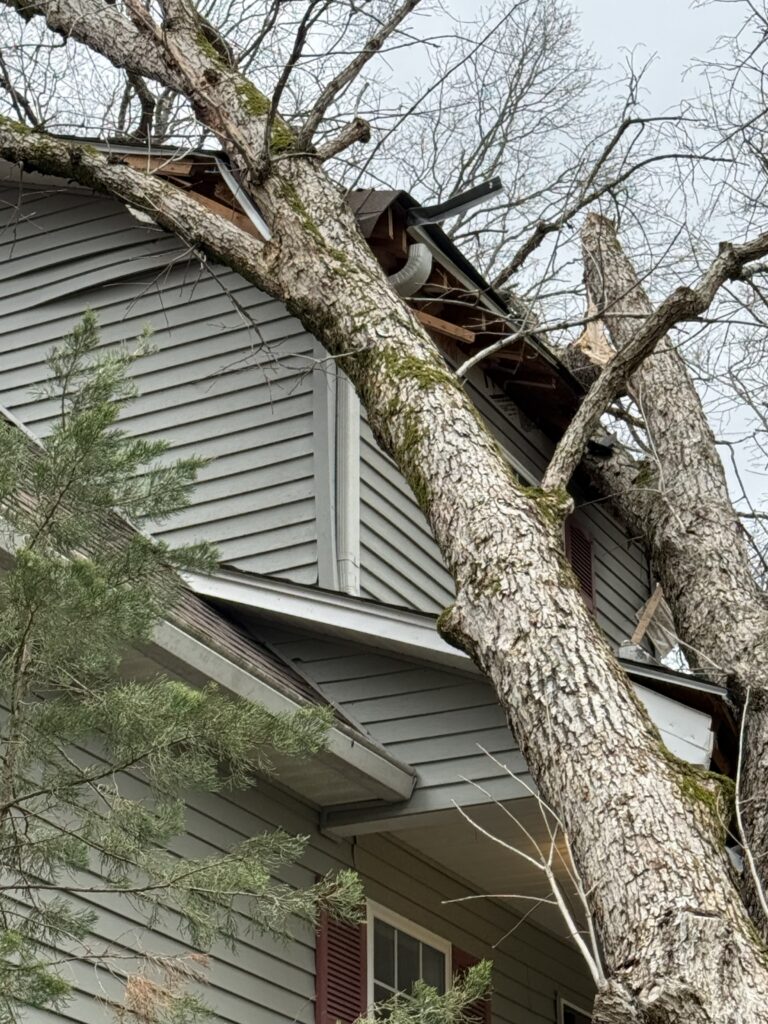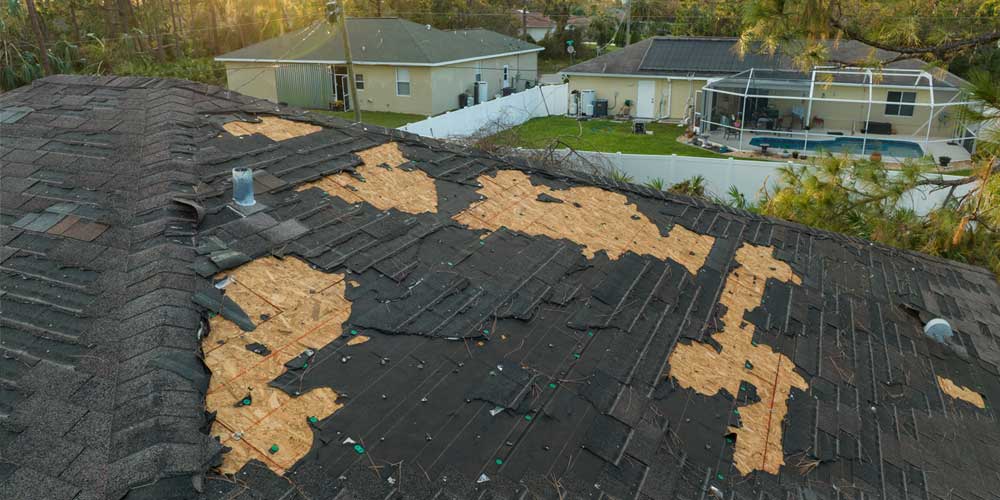
Most homeowners only think about their roof when water starts dripping through the ceiling. By then, the real problem has usually been sitting up there for months. A storm damage roof replacement is rarely about the leak you can see it’s about the damage you can’t, the kind that quietly shortens your roof’s life and turns into a much bigger repair bill the longer you wait.
If you’ve had a hailstorm, high winds, or a heavy thunderstorm roll through your area in the past year, this guide will help you understand what’s likely happening above your head right now and what to do about it before it becomes urgent. If you want a professional eye on it sooner rather than later, you can schedule your free estimate and get a documented assessment without committing to anything.
What Counts as Storm Damage on a Roof?
Storm damage isn’t one thing. It’s a category that covers several types of impact, each leaving a different fingerprint on your roof:
- Hail damage bruises, fractures, and granule loss on shingles
- Wind damage lifted, creased, or missing shingles and broken seals
- Wind-driven rain moisture forced under shingles and into flashing
- Debris impact falling limbs, projectiles, or punctures
- Pressure changes uplift stress from sudden high-wind events
The tricky part is that most of these don’t produce immediate leaks. Modern asphalt shingles are designed to keep performing even when compromised, which is good for short-term protection and bad for diagnosis. A roof can look perfectly normal from the driveway while the underlying mat is fractured in dozens of spots.
Why Hidden Damage Is the Real Problem
Here’s what I see again and again in the field: a homeowner waits until they see a stain on the ceiling, calls a roofer, and discovers the actual damage happened during a storm six or nine months earlier. By then, three things have usually gone wrong:
- The insurance window is closing or already closed. Most Tennessee policies give you one year from the date of loss some carriers have shortened it to 180 days.
- The damage has spread. Water that gets past shingles soaks decking, insulation, and framing.
- The repair scope is now much larger. What could have been a roof-only claim now includes drywall, paint, and sometimes mold remediation.
Catching storm damage early isn’t about being paranoid. It’s about staying ahead of a timeline that’s already running.
The Hidden Signs Worth Checking After a Storm
Granule Loss in Your Gutters
Asphalt shingles are coated in mineral granules that protect the asphalt from UV exposure. Storms knock these granules loose, and they wash into gutters and downspouts.
A small amount of granule shedding is normal, especially on newer roofs. A noticeable buildup think black, sandy sediment pooling at downspout outlets after a single storm is not. Once granule loss is significant, the underlying asphalt degrades quickly under sun exposure.
Bruised or Soft Shingles
Hail doesn’t always crack a shingle. More often, it leaves a bruise a soft, slightly sunken spot where the mat is fractured but the surface hasn’t broken through. These bruises are easy to miss from the ground and even from a quick rooftop walk. They feel soft under thumb pressure and will fail within a year or two.
This is one of the most common types of damage that gets missed during cursory inspections.
Lifted or Creased Shingles
Sustained winds above about 50 mph can break the thermal seal between shingle courses without tearing anything off. The shingle settles back down but no longer adheres. Look for faint horizontal creases running across the shingle near the bottom edge that’s a permanent failure point waiting for the next windy day.
Damaged Flashing and Pipe Boots
Flashing around chimneys, skylights, and vents is where roofs leak first. Hail bends the metal lip; wind stresses caulk seals until they crack. Rubber pipe boots are especially vulnerable their normal service life is 10 to 12 years, but a storm can shorten that dramatically.
Attic Warning Signs
If you can safely get into your attic, do it within a week of any major storm. Bring a flashlight and check for:
- Pinpoints of daylight through the roof deck
- Dark streaks on rafters or decking
- Damp, matted, or discolored insulation
- A musty smell that wasn’t there before
- Rust or “frost” on the underside of nail tips
Attic evidence shows up weeks before ceiling stains. It’s the earliest warning system most homes have.
Repair or Replace: How to Think About It
Not every storm-damaged roof needs replacement. But storm damage changes the calculation in ways that ordinary wear doesn’t.
Replacement usually makes more sense when:
- Damage is documented on three or more slopes
- The roof is more than 12 years old
- Granule loss is widespread, not localized
- Multiple flashing components are compromised
- An insurance adjuster has approved partial replacement (carriers often won’t, because mismatched shingle batches lead to future claims)
Repair can still be the right call when:
- Damage is isolated to one slope or small area
- The roof is under 8 years old with active manufacturer warranty
- Surrounding shingles pass granule and flexibility checks
The mistake I see most often is paying for spot repairs on a roof where the surrounding shingles have already been stressed by the same storm. Those repairs hold for 12 to 24 months, then the adjacent shingles start failing, and the homeowner ends up paying twice.
Benefits and Limitations of Replacement
A full storm damage roof replacement isn’t free of trade-offs, even when insurance covers most of it. It’s worth knowing both sides going in.
Benefits:
- Resets the roof’s service life typically 20 to 30 years for modern asphalt
- Restores full manufacturer warranty coverage
- Eliminates the patchwork of mismatched repairs over time
- Often improves energy efficiency with modern underlayment and ventilation
- Adds resale value, particularly with documented warranty transfer
Limitations:
- Even with insurance, you’ll owe your deductible
- The process disrupts your home for 1 to 3 days
- Color matching to siding and trim takes thought
- A new roof can reveal underlying issues with decking or framing that add to scope
Both Residential Roofing Services and Commercial Roofing Contractor projects come with these trade-offs in different proportions. Commercial flat roofs, for instance, have a different damage profile and replacement timeline than residential pitched roofs.
Common Mistakes to Avoid After a Storm
- Waiting for a leak. By then, you’ve lost months of insurance timeline.
- Accepting the first inspection at face value. A second opinion costs nothing and frequently uncovers missed damage.
- Signing a contractor’s contingency agreement before you understand it. Some lock you into using that contractor regardless of claim outcome.
- Filing a claim before documenting damage. Take photos within 48 hours of any major storm, before anything is touched.
- Hiring out-of-state storm chasers. Crews that follow weather patterns often disappear before warranty issues surface. Verify a local physical address.
- Skipping the attic check. It’s the cheapest, fastest diagnostic you have.

Expert Tips Worth Following
- Photograph everything within 48 hours. Time-stamped photos establish the date of loss for insurance purposes.
- Get the inspection within 30 days. Most reputable contractors do this at no cost.
- File before you negotiate. Open the claim first, then deal with scope. The filing date stops the clock.
- Have your roofer present during the adjuster’s inspection. Adjusters do thorough work, but a second trained eye catches more.
- Verify licensing and insurance. Tennessee requires state licensing for roofing work over $25,000. Ask for current certificates of liability and workers’ comp.
- Look into government assistance if you qualify. After major disasters, programs like the USDA Single Family Housing Repair Loans and Grants can help eligible homeowners cover repairs outside insurance coverage.
A Real Example from Middle Tennessee
A homeowner in Spring Hill called us about six months after a hailstorm. No leaks, no obvious damage. Two other roofers had told him his roof was fine. His insurance window was three weeks from closing.
The street-facing slope was clean. The back slope invisible from the ground had 47 hail impacts per 100 square feet, several through-and-through. His policy covered a full replacement. Another month of waiting and he’d have paid out of pocket for a roof that was already failing.
That outcome isn’t unusual. It’s the rule, not the exception, with hidden storm damage. We see the same pattern across Replacement & Roofing Contractor Spring Hill TN , Franklin Roofing Contractor TN, and the surrounding Middle Tennessee area every storm season.
Frequently Asked Questions
How long do I have to file a storm damage claim in Tennessee?
Most policies allow one year from the date of loss, but some carriers have shortened this to 180 days. Check your specific policy language and file early when in doubt opening the claim stops the deadline.
Will filing a claim raise my premium?
Storm damage is usually classified as an “act of God” claim and doesn’t affect individual premiums the way an at-fault claim would. Regional rates may shift after widespread events, but that happens whether you file or not.
Can I just replace the damaged side of the roof?
Sometimes, but insurance carriers increasingly resist partial replacement because shingle batches don’t match perfectly and future claims become more likely. If three or more slopes show damage, full replacement is usually approved.
How much does storm damage roof replacement cost in Middle Tennessee?
In 2026, expect roughly $4.50 to $7.50 per square foot for asphalt shingle replacement, depending on roof pitch, complexity, and material. Most insurance-covered replacements leave the homeowner responsible only for the deductible.
Do I need to be home for an inspection?
No. An inspector can assess the exterior without interior access, though attic access provides much better diagnostic information when available. Scheduling works either way.
When to Call Someone
If your area has had any meaningful storm activity in the past 12 months and you haven’t had the roof checked, that’s the signal. You don’t need a leak. You don’t need visible damage. You just need a documented inspection while your insurance window is still open.
A free, no-obligation inspection from a licensed local roofer takes about 45 minutes and gives you something concrete to work with either peace of mind or a head start on a claim. Either result is worth the time.
Conclusion:
a storm damage roof replacement is your home’s best defense against invisible structural decay. Don’t wait for a leak to signal a crisis. At Veteran Roofing Systems, we ensure your safety by catching what others miss. Secure your home and your peace of mind before the next storm.
Schedule your free estimate with our team and get a photo-documented assessment within 48 hours.
Call Us: 615-237-8856
Reviews
Commercial Flat Roofing Explained: Benefits, Materials & TN Market Demand
Commercial Flat Roofing for Modern Businesses TN Commercial flat roofing is one of the most reliable and cost-effective solutions for […]
Read More… from Commercial Flat Roofing Explained: Benefits, Materials & TN Market Demand
Commercial Roofing Services for Repairs, Maintenance & Replacement
Business Owners And Property Managers In Spring Hill TN, Franklin TN, Chapel Hill TN, College Grove TN, Leiper’s Fork TN, […]
Read More… from Commercial Roofing Services for Repairs, Maintenance & Replacement
Metal Roofing Installation: Step-by-Step Guide for Homeowners
Metal Roofing Installation Has Become One Of The Most Reliable And Long-Term Roofing Solutions For Homeowners Across The United States. […]
Read More… from Metal Roofing Installation: Step-by-Step Guide for Homeowners