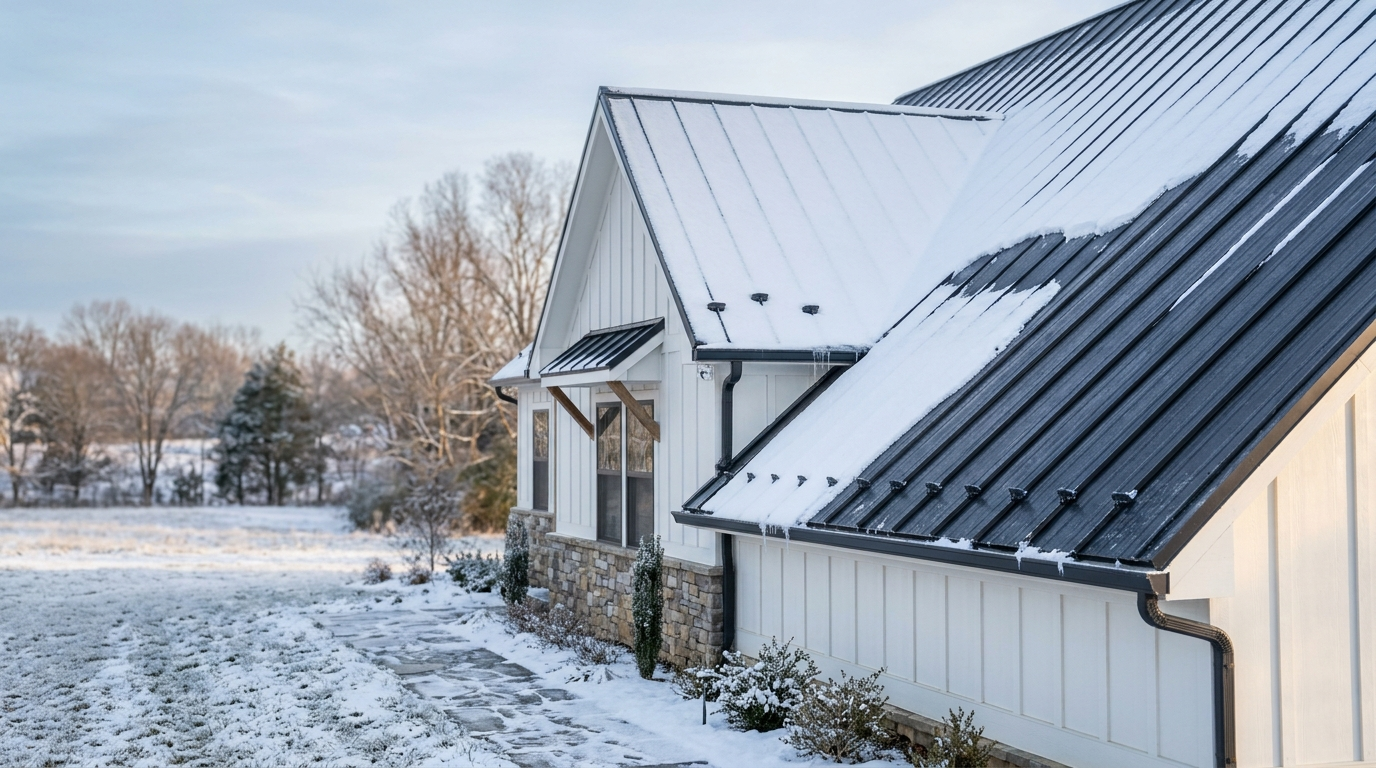
Are metal roofs good in winter? Yes, in most cases. Metal sheds snow and ice quickly and handles cold weather well when it is installed correctly. It is not maintenance free, though. Smooth panels can send snow sliding off all at once, and ice dams can still form if your attic leaks heat, so snow guards, insulation, and ventilation matter.
Tennessee winters bring occasional snow, freezing rain, and quick thaws. That mix puts stress on any roof, and it is a big reason homeowners ask how metal compares to shingles. This guide covers snow, ice dams, noise, and snow guards, with honest trade offs.
Key Takeaways
- Metal roofs shed snow and ice quickly, which is a benefit but can create a sliding snow hazard without snow guards.
- Ice dams can still form on a metal roof if heat escapes from the attic, so insulation and ventilation still matter.
- Noise is mostly a rain and hail issue, and the right decking and underlayment can reduce it.
Are Metal Roofs Good in Winter? How They Handle Cold Weather
Metal roofs perform well in winter because their smooth surface sheds snow and ice, and the material does not absorb water. Quality panels are also strong enough to stand up to heavy snow and ice. The Metal Roofing Alliance, an industry group, says quality metal roofs perform extremely well under heavy snow and ice.
Performance still depends on installation. Proper flashing, fasteners, sealants, and attic conditions decide whether a metal roof stays leak free through freeze and thaw cycles. A great panel on a poorly installed roof will still have problems.
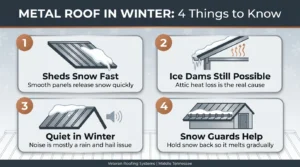
Do Metal Roofs Hold Snow?
Metal roofs usually do not hold snow for long. Smooth panels shed it quickly once the sun comes out or the roof warms, which helps reduce the weight on your roof.
That quick release can be a hazard. Snow can slide off in a large sheet, damaging gutters, shrubs, vehicles, and even people below. According to the Metal Roofing Alliance, smooth metal panels have slicker surfaces and may need quality snow guards, while stone coated metal has a rougher texture that helps keep snow from releasing in big sheets.
How much snow a roof can carry depends mostly on its structure, not just the material. If you are worried about heavy snow, have a professional check your roof framing.
Do Metal Roofs Get Ice Dams?
Yes, they can. An ice dam is a ridge of ice at the roof edge that forms when melting snow refreezes and traps water behind it. Metal is smooth, so snow often slides off before it can build up, but ice dams can still form when heat from your home warms the roof deck and melts snow unevenly.
The fix is the same for any roof: keep the attic cold and the roof deck an even temperature. That means sealing air leaks, adding insulation, and keeping vents clear. The U.S. Department of Energy explains that air sealing between the attic and living space saves energy and helps prevent moisture problems in the attic. See our guide to attic ventilation for more.
Ice dams are less common in Middle Tennessee than in colder states. If you see leaks after a thaw, read our guide on a roof leak after snow.
Are Metal Roofs Noisy in Winter?
Usually not in winter. Metal roof noise is mostly about rain and hail, and snow tends to muffle sound. The sound you may notice in winter is light ticking or popping as panels expand and contract with temperature changes.
A professional installation helps. Solid roof decking, quality underlayment, and attic insulation all reduce noise. If sound is a concern, ask your roofer how the system will be built.
Metal Roof vs Shingles in Winter: Which Performs Better?
Both can perform well in Tennessee winters. The best choice depends on your home, budget, and how much sliding snow matters at your property.
| Factor | Metal Roof | Asphalt Shingles |
|---|---|---|
| Snow shedding | Sheds quickly, and smooth panels may need snow guards | Holds snow longer because of the textured surface |
| Freeze and thaw | Does not absorb water, but fasteners and seams need checks | Can crack or lose granules over time |
| Ice dams | Still possible without proper insulation and ventilation | Still possible without proper insulation and ventilation |
| Noise | Can be louder in rain or hail unless well insulated | Generally quieter |
| Sliding snow hazard | Higher without snow guards | Lower |
| Upfront cost | Generally higher | Generally lower |
If you are comparing costs, see our guide on metal roofing cost.
Do You Need Metal Roof Snow Guards in Tennessee?
Snow guards are worth considering when snow could slide onto doors, walkways, driveways, lower roofs, or gutters. Snow is less frequent here than in northern states, but one heavy snow or ice event is enough to cause damage or injury.
Snow guards hold snow back so it melts and releases gradually. The Metal Roofing Alliance advises that a good system is designed with local snow loads and roof details in mind, and that the entire eave line should be protected, not just a spot above a door. Placement matters, and the parts should be durable metal that lasts as long as the roof.
This is not a DIY job. Ask a qualified roofer to design and install snow guards for your roof type.
How Do You Care for a Metal Roof in Winter?
A metal roof needs light care, mostly before winter and after storms.
- Have a roofer check fasteners, sealants, and flashing in fall
- Keep gutters clear so melting snow can drain
- Check attic insulation and ventilation to prevent ice dams
- Stay off the roof, since metal is very slippery when wet, icy, or snowy
- Do not chip ice or use sharp tools on the panels
- Keep people and vehicles away from the eave line during a thaw
For a fuller list, use our winter roof maintenance checklist. After an ice event, our guide on roof leaks after an ice storm can help.
Is a Metal Roof Right for Your Home?
A metal roof can be a strong choice if you want a durable system that sheds snow and ice well. It is not the right fit for every home or budget. Upfront cost is often higher, and installation quality matters a lot.
If you are deciding between repair and replacement, read about the signs you should not ignore when it comes to roof replacement. A professional can then help you compare options for your roof and your winter risks.
How Veteran Roofing Systems Can Help
Veteran Roofing Systems serves homeowners across Middle Tennessee, with 20 years of roofing experience. Our crews can look at your roof, attic, and winter risks, and explain whether metal, shingles, or a repair makes the most sense. You get clear options with no pressure.
Frequently Asked Questions
Do metal roofs hold snow?
Usually only for a short time. Smooth metal panels shed snow quickly, which reduces the weight on the roof but can cause sudden sliding. Stone coated metal grips snow better. Snow guards slow the release so it melts gradually. The roof structure, not just the panels, decides how much snow it can carry.
Do metal roofs get ice dams?
They can. Ice dams form when heat escapes into the attic, melts snow unevenly, and the water refreezes at the roof edge. Metal sheds snow well, but it does not fix attic heat loss. Air sealing, insulation, and ventilation are the real solutions on any roof.
Are metal roofs noisy in winter?
Not usually. Noise is mostly an issue during rain and hail, and snow tends to muffle sound. You may hear light ticking as panels expand and contract with temperature changes. Solid decking, underlayment, and attic insulation reduce noise, so ask your roofer about the installation.
Is a metal roof better than shingles in winter?
It depends. Metal sheds snow and ice faster and does not absorb water. Shingles hold snow longer and are generally quieter and cheaper upfront. Either can work well in Tennessee if installed correctly and paired with good attic insulation and ventilation.
Do I need snow guards on my metal roof?
Often yes, if snow could slide onto doors, walkways, driveways, or lower roofs. Smooth panels shed snow in large sheets, which can hurt people and damage property. Snow guards hold it back so it melts gradually. A qualified roofer should design and install them for your roof.
Can I walk on or shovel my metal roof in winter?
No. Metal is extremely slippery when wet, icy, or snowy, and falls are a serious risk. FEMA also warns that roof snow removal is dangerous and should be done only by qualified people. If you are worried about snow load, call a roofer instead.
Does a metal roof make my house colder in winter?
No. Heat loss depends mostly on your attic insulation, air sealing, and ventilation, not the roofing material. A properly insulated home stays just as warm under metal as under shingles. If your home feels cold or has ice at the roof edge, have the attic checked.
Final Thoughts
Are metal roofs good in winter? For most Tennessee homes, yes, as long as the roof is installed well, the attic is insulated and ventilated, and snow guards are used where sliding snow could cause harm. If you would like a professional opinion on your roof, you can request a free roof inspection from Veteran Roofing Systems.

Commercial Roof Replacement Cost: What to Expect and How to Plan (2026 Guide)
For commercial property owners and facility managers, a roof replacement is more than just a maintenance task; it is a […]
Read More… from Commercial Roof Replacement Cost: What to Expect and How to Plan (2026 Guide)
Can You Get a New Roof Before Christmas in Tennessee?
Yes, it can be done, but it is not a sure thing. Getting a new roof before Christmas depends on […]
Read More… from Can You Get a New Roof Before Christmas in Tennessee?
Professional Roofers Franklin TN: What to Know Before Hiring
Finding professional roofers Franklin TN homeowners can actually trust is not always simple. The market is full of traveling storm chasers, underinsured crews, […]
Read More… from Professional Roofers Franklin TN: What to Know Before Hiring