
Introduction: The Big Question About Metal Roofs
When it comes to roofing, metal roofs are known for their strength, durability, and sleek modern appearance. But one question still makes many homeowners hesitate:
👉 “Are metal roofs safe during lightning and hail storms?”
The short answer is yes — metal roofs are among the safest and most weather-resistant roofing options available. However, understanding why they are safe requires looking into how metal behaves during storms and what makes it ideal for extreme weather conditions.
In this detailed guide, we’ll explore how metal roofing performs in lightning and hail, debunk myths, and show you why Veteran Roofing Systems is a trusted name for reliable roof protection in Columbia, TN, and beyond.
1. Understanding Lightning and How It Interacts with Metal Roofs
Does Metal Attract Lightning?
One of the most common misconceptions is that metal roofs “attract” lightning. In reality, metal doesn’t attract lightning — it only conducts electricity if struck.
Lightning is drawn to the tallest object or the shortest path to the ground — not to metal specifically. That’s why trees, antennas, towers, and even chimneys often get hit before a metal roof does.
So, if your house isn’t the highest point in the area, your metal roof won’t make it more likely to get struck by lightning.
What Happens If Lightning Strikes a Metal Roof?
If lightning does strike, a metal roof actually makes your home safer.
Here’s why 👇
- Metal is non-combustible, so it won’t ignite like wood or asphalt materials.
- It disperses electrical energy quickly through the structure and into the ground.
- When properly grounded, it minimizes damage to both your home and its electrical systems.
In short, instead of increasing risk, metal roofs reduce fire danger during lightning strikes.
Scientific Proof Behind the Safety
According to the Metal Construction Association (MCA), metal roofs do not increase the likelihood of a lightning strike and are among the safest materials when lightning does occur.
The combination of non-combustibility and electrical conductivity ensures that lightning energy dissipates harmlessly.
So, when you invest in a metal roof from Veteran Roofing Systems, you’re choosing safety backed by science and decades of proven results.
2. Metal Roofing Performance in Hail Storms
How Hail Affects Different Roofing Materials
Hail can cause serious damage to roofing materials like asphalt shingles, tiles, or wood shakes. These materials tend to:
- Crack under impact
- Lose granules
- Expose underlayment
- Suffer leaks over time
By contrast, metal roofs are impact-resistant and tested under UL 2218 Class 4 standards — the highest rating for hail performance.
Why Metal Roofs Resist Hail Damage Better
Here’s what gives metal roofs an edge:
- Durable alloys: Steel, aluminum, or copper panels don’t break or split.
- Impact absorption: Flexible yet strong metal can absorb hail hits without structural failure.
- Hidden fasteners & interlocking panels: Reduce water intrusion risks after hailstorms.
- Protective coatings: Modern finishes like Kynar 500 prevent rust or corrosion even after dents.
- Even in severe storms, hail may cause minor cosmetic dents — but not leaks or structural damage.
Insurance Benefits
Many insurance providers offer premium discounts for homes with metal roofs due to their hail resistance and fire safety. That means your investment not only lasts longer but can also reduce long-term costs.
When Veteran Roofing Systems installs a metal roof, we ensure it meets impact-resistance standards for maximum protection and potential insurance savings.
3. Comparing Metal Roofs vs. Other Roofing Types
| Roofing Type | Lightning Safety | Hail Resistance | Lifespan | Fire Resistance |
|---|---|---|---|---|
| Asphalt Shingles | Moderate | Poor–Moderate | 15–20 years | Fair |
| Wood Shakes | Poor | Poor | 20–25 years | Low |
| Clay Tiles | Good | Moderate | 40–50 years | High |
| Metal Roof | Excellent | Excellent (Class 4) | 40–70 years | Non-combustible |
As you can see, metal roofs outperform other materials in almost every major weather-related category.
4. The Science Behind Metal Roof Grounding
A grounded metal roof safely channels electrical energy away from your structure. Professional installation ensures proper bonding to the ground, similar to lightning rods on tall buildings.
Veteran Roofing Systems uses certified grounding methods to make sure your roof is both beautiful and electrically safe.
Benefits of proper grounding:
- Prevents electrical damage to appliances
- Reduces risk of secondary fires
- Extends roof longevity
5. Metal Roof Durability in Real Storm Conditions
Tennessee experiences heavy thunderstorms and hail during certain months. Homeowners in Columbia, TN need roofing that can handle these conditions year after year.
Metal roofs are designed to endure:
- 120+ mph wind gusts
- Large hail impact
- Heavy rain and ice buildup
- High UV exposure
Unlike shingles that may loosen or warp, metal panels remain intact and sealed — keeping your home watertight and safe.
6. Maintenance and Longevity
One of the best parts about metal roofing is low maintenance. After severe weather, a quick inspection is usually all you need.
Tips for caring for your metal roof:
- Inspect fasteners and sealants annually.
- Keep gutters clear of debris.
- Wash surface dirt with mild soap and water.
- Schedule a professional inspection after major storms.
With proper care, your metal roof can last 50+ years — easily twice the lifespan of asphalt shingles.
7. Environmental & Energy Benefits
Beyond safety, metal roofing also offers energy efficiency advantages. Reflective coatings help reduce cooling costs by up to 25% during Tennessee’s hot summers.
Plus, metal roofs are 100% recyclable, making them one of the most eco-friendly roofing materials available.
Homeowners and business owners who choose Veteran Roofing Systems not only protect their property but also make a greener, more sustainable choice.
8. Common Myths About Metal Roofs (Busted!)
| Myth | Reality |
|---|---|
| Metal roofs attract lightning | False — they don’t attract lightning more than other roofs. |
| Metal roofs get dented easily | False — most have Class 4 impact resistance. |
| Metal roofs are noisy | False — when installed with insulation, they’re as quiet as shingles. |
| Metal roofs rust easily | False — modern coatings prevent corrosion for decades. |
| Metal roofs are too expensive | False — long lifespan makes them cost-effective long term. |
9. Real-World Case Study – Metal Roof Performance in Columbia, TN
During the 2024 hail and lightning storms in Columbia, TN, homes with metal roofs installed by Veteran Roofing Systems showed minimal damage compared to shingle roofs in the same neighborhoods.
Customers reported:
- No leaks or structural issues
- Only minor surface marks
- Zero fire-related damage from lightning
This real-world performance proves why metal roofing is the go-to solution for safety and durability.
10. Expert Recommendations
If you live in an area prone to lightning and hail — like Columbia, Franklin, or Spring Hill, TN — investing in a metal roof is a smart long-term choice.
Veteran Roofing Systems recommends:
- Standing seam metal roofs for superior water resistance
- Proper grounding for lightning protection
- Impact-rated panels for maximum hail safety
Our team ensures every roof is installed with attention to detail, meeting both local building codes and manufacturer standards.
11. Why Choose Veteran Roofing Systems?
If you’re considering upgrading to a metal roof in Columbia, TN, or anywhere in Tennessee, Veteran Roofing Systems delivers unmatched craftsmanship, safety, and peace of mind.
Here’s why customers trust us:
- Veteran-owned and operated 🇺🇸
- Local experience with Tennessee weather patterns
- Licensed, insured, and certified roof installers
- Focus on durability, precision, and customer satisfaction
Our commitment goes beyond roofing — we protect what matters most: your home, your family, and your investment.
FAQs About Metal Roof Safety
Q1: Do metal roofs increase lightning risk?
No, metal roofs don’t attract lightning. They just conduct it safely if a strike happens.
Q2: Will a metal roof get damaged by hail?
Not easily. Most metal roofs have Class 4 hail resistance, the highest rating possible.
Q3: Are metal roofs noisy during rain or storms?
No. With insulation and decking underneath, they’re very quiet.
Q4: How long do metal roofs last?
Typically 40–70 years, depending on the material and maintenance.
Q5: Can a metal roof help reduce insurance premiums?
Yes! Many insurers offer discounts for homes with fire- and hail-resistant roofing.
Conclusion
Severe weather is unpredictable — but your roof doesn’t have to be.
When it comes to metal roof safety in lightning and hail storms, there’s no better protection than a properly installed, high-quality metal roof.
If you’re ready to upgrade to a stronger, safer, and longer-lasting roof, contact Veteran Roofing Systems today. Our experts proudly serve Columbia, TN, and surrounding areas with honest service, precision work, and guaranteed satisfaction.
👉 Call Veteran Roofing Systems today or visit veteranroofingsystems.com to schedule your free roofing consultation!
Reviews

Roofers in Columbia TN, Trusted Local Roofing Experts
Finding the Right Roofers in Columbia, TN: What Every Homeowner Should Know When it comes to homeownership, there are few […]
Read More… from Roofers in Columbia TN, Trusted Local Roofing Experts
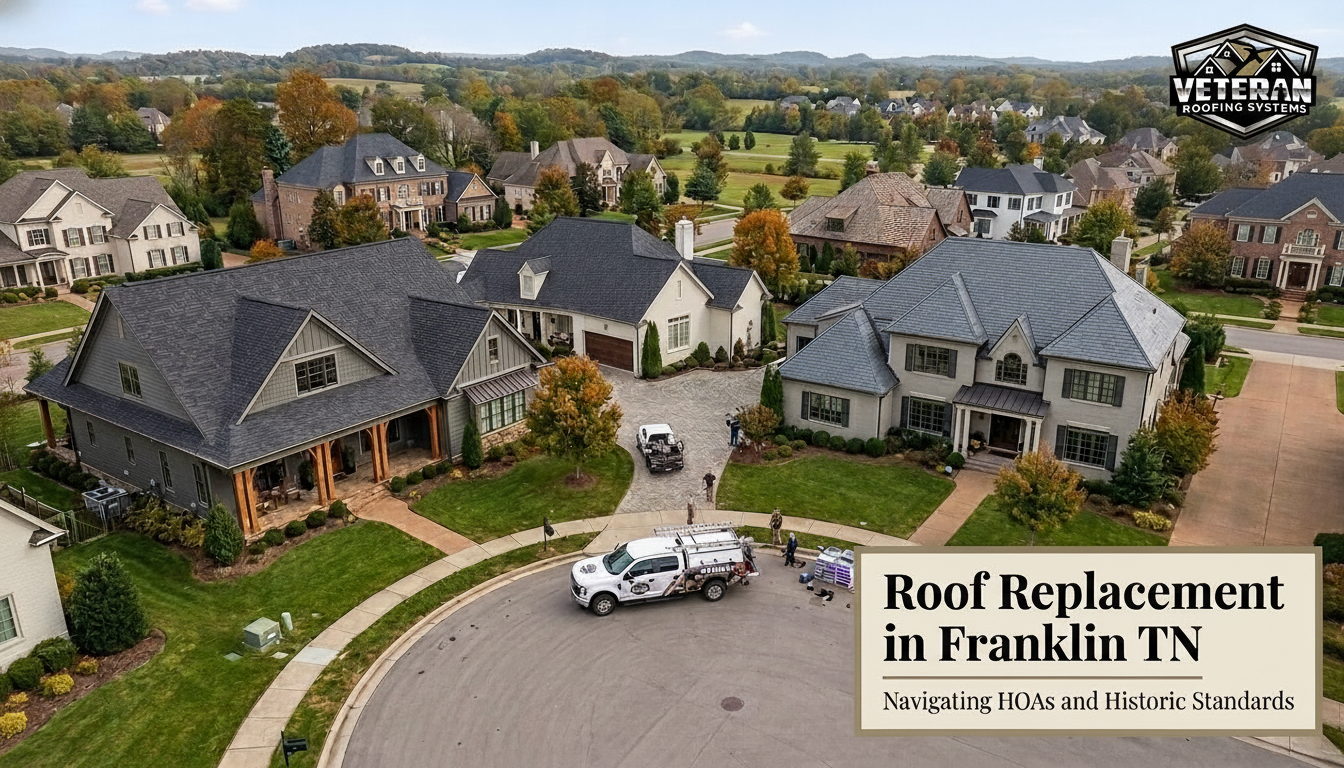
Roof Replacement in Franklin TN: Navigating HOAs and Historic Standards
The architectural landscape of Franklin, Tennessee, is a masterclass in Southern elegance. From the historic charm of downtown estates to […]
Read More… from Roof Replacement in Franklin TN: Navigating HOAs and Historic Standards

Emergency Roof Repair Columbia TN Fast Trusted, Veteran Owned Service
Fast & Reliable Emergency Roof Repairs in Columbia TN When your roof is damaged during a storm, you need help […]
Read More… from Emergency Roof Repair Columbia TN Fast Trusted, Veteran Owned Service