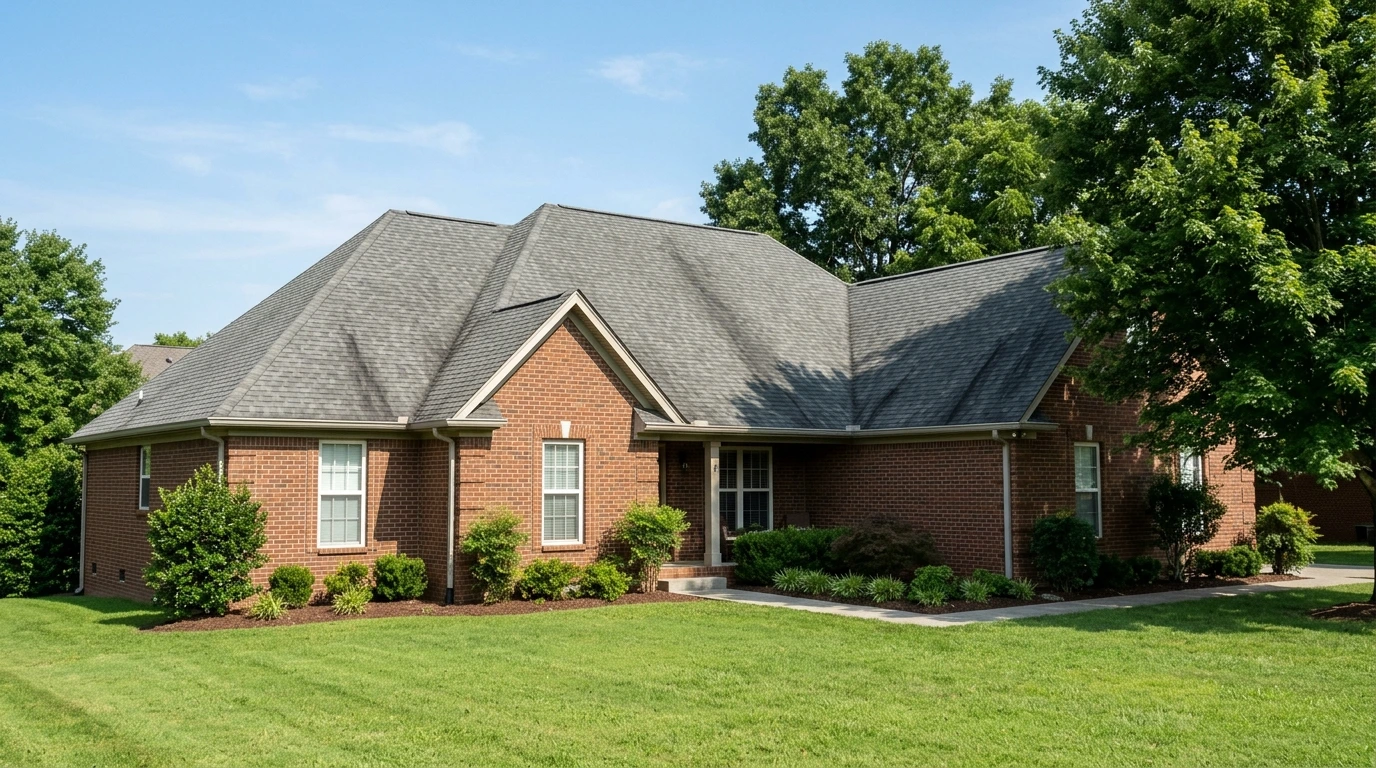
Black streaks on roof shingles can look alarming, especially when the rest of your roof seems fine. In Tennessee, they are usually algae, not dirt or damage. However, you should know what they mean before you ignore them or try a risky fix.
Quick Answer: What Do Those Dark Streaks Mean?
Black streaks on roof shingles in Tennessee are usually algae called Gloeocapsa magma, not dirt. The algae thrives in humid weather and feeds on limestone in asphalt shingles. Early streaks are often cosmetic. However, heavy growth, moss, or granule loss can shorten shingle life, so schedule a roof inspection.
What Are Those Dark Streaks?
Most dark streaks come from a cyanobacteria named Gloeocapsa magma. People often call it roof algae because it spreads like algae and looks green or black. In strong sunlight, it builds a dark outer layer that protects it from UV rays. That dark layer creates the streaks you see.
The streaks often look like soot or dirt, so many homeowners try to wipe them away. However, the growth lives on the shingle surface and keeps coming back. Therefore, a proper plan works better than a quick scrub.
Why Black Streaks on Shingles Show Up in Tennessee
Tennessee gives roof algae what it wants: warmth, humidity, and shade. A U.S. Patent and Trademark Office record on algae-resistant shingles explains that dark blotches and streaks often appear on asphalt shingles in warmer, humid climates, and that Gloeocapsa magma is the main species behind them.
Several factors help the growth spread:
- Humidity and rain: Moisture keeps the shingle surface damp.
- Shade: Trees block sunlight and slow drying.
- Limestone filler: Many asphalt shingles contain limestone, which gives the algae a food source.
- Airborne spores: Wind carries the organism from roof to roof.
- Debris: Leaves and pine needles hold water against the roof.
In addition, the growth often starts on the north-facing slope. According to another U.S. Patent and Trademark Office filing, discoloration typically appears where moisture stays longest, such as the northern slope.
Are the Streaks Damaging Your Roof?
Experts do not all agree on this point. Some roofing professionals say light algae is mostly cosmetic. Others warn that heavy growth can hold moisture and speed up wear on the shingles. Therefore, the safest answer is that it depends on how long the growth has lasted and how far it has spread.
Here are the main concerns:
- Granule loss: Algae and moisture can loosen the granules that protect the shingle.
- Trapped moisture: Damp shingles age faster.
- Heat gain: Dark growth can reduce how well a roof reflects sunlight. The U.S. Department of Energy’s research on soiling and roof reflectance shows that soot, dust, and algae can lower a roof’s solar reflectance.
- Curb appeal: Streaks make a roof look older and neglected, which matters if you plan to sell.
Algae, Moss, or Mold? How to Tell the Difference
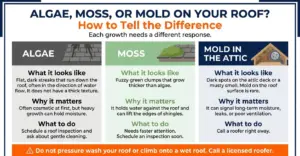
Not every dark or green patch is algae. Each growth type needs a different response.
Algae
Algae looks like flat, dark streaks that run down the roof, often in the direction of water flow. It does not have a thick texture.
Moss on Roof Shingles
Moss looks like fuzzy green clumps. It grows thicker than algae, holds water against the roof, and can lift the edges of shingles. As a result, moss on roof surfaces usually needs faster attention.
Mold in the Attic
Mold on the roof surface is rare. However, mold in the attic can signal long-term moisture, leaks, or poor ventilation. If you see dark spots on the attic deck or smell mustiness, call a roofer right away.
When to Worry: Signs It Is More Than Algae
Take streaks seriously when you also notice these problems:
- Granules collecting in gutters or at the downspouts
- Curled, cracked, or lifted shingles
- Thick moss or lichen on the roof
- Soft spots or sagging areas
- Water stains on ceilings or walls
- Dark spots, damp insulation, or a musty smell in the attic
- Streaks that spread quickly over a short time
If any of these signs appear, schedule a professional roof inspection in Tennessee. A trained roofer can separate surface staining from real roof damage.
Roof Algae Removal: What Works and What to Avoid
Roof algae removal sounds simple, but the wrong method can damage your shingles. Follow these guidelines.
The Safer Approach
Hire a professional to use a gentle, low-pressure cleaning method with roof-safe products. This approach removes the growth without stripping the granules. In addition, a pro can protect your landscaping, gutters, and metal parts during the job.
What to Avoid
- Pressure washing: High pressure can strip granules and push water under shingles.
- Scrubbing with a stiff brush: This can scrape the surface.
- Climbing onto a wet roof: Falls cause serious injuries.
- Using harsh chemicals without guidance: They can harm plants, metal, and the roof itself.
- Cleaning to hide damage: A clean roof still needs an inspection.
How to Prevent Algae and Moss From Coming Back
Cleaning helps, but prevention keeps the roof looking better longer. Try these steps:
- Choose algae-resistant shingles: Many use copper-containing granules to slow algae growth. If you plan a new roof, ask about these options in our residential roofing services.
- Add zinc or copper strips: Placed near the ridge, these metals can help rain carry growth-slowing ions down the roof.
- Trim overhanging branches: More sun and airflow help the roof dry faster.
- Clean gutters: Clogged gutters hold water at the roof edge.
- Remove debris: Leaves and needles keep shingles damp.
- Inspect each year: Early checks catch moss, granule loss, and small repairs.
Clean, Repair, or Replace?
The right choice depends on the condition of the shingles, not just the streaks.
- Clean: The shingles are intact, and the growth is mostly surface staining.
- Repair: A few shingles are cracked, lifted, or missing, or flashing needs attention.
- Replace: Granule loss is widespread, shingles are brittle, or leaks keep returning.
A licensed roofer can show you photos and explain each option in plain language.
What a Roof Inspection Checks
A good inspection looks beyond the streaks. Your roofer should check the shingle surface, granule loss, moss, flashing, gutters, and the attic for moisture. As a result, you get a clear picture of your roof’s health and a plan for the next step. Ready to start? Request a free estimate and let our team take a look.
Common Mistakes Homeowners Make
Homeowners often rush to fix the look and miss the bigger picture. Avoid these mistakes:
- Calling it dirt and ignoring it. Growth keeps spreading.
- Pressure washing the roof. This shortens shingle life.
- Climbing up to scrub. A slip can cause serious harm.
- Ignoring moss. Moss holds water and lifts shingles.
- Skipping the gutters. Granules in the gutters can warn you about wear.
- Cleaning without an inspection. You may miss damage underneath.
Frequently Asked Questions About Roof Streaks
Are those dark streaks on my roof just dirt?
Usually not. In most cases, the streaks are roof algae, a type of cyanobacteria called Gloeocapsa magma. Dirt and soot can also stain a roof, but algae is the most common cause on asphalt shingles in humid areas like Tennessee.
Will the streaks hurt my roof or just look ugly?
Light streaks are often cosmetic at first. However, heavy or long-term growth can hold moisture and may speed up shingle wear. A roof inspection can tell you which situation you have.
Can I pressure wash my roof to get rid of the streaks?
No, please do not. High pressure can strip the protective granules off your shingles and force water under them. A professional can clean the roof with a gentle, roof-safe method instead.
Why is the algae only on one side of my roof?
Algae loves shade and moisture. The north-facing slope often stays damp longer, and tree cover can add even more shade. That is why streaks often show up on one side first.
Is moss on my roof worse than algae?
Often, yes. Moss grows in thick, fuzzy clumps that hold water against the roof and can lift the edges of shingles. If you see moss, schedule an inspection soon.
Do algae-resistant shingles really stop the streaks?
They help resist algae growth, but they are not a guarantee. Many use copper-containing granules to slow growth. Shade, moisture, and regular maintenance still affect how your roof looks over time.
Got Streaks? Get a Clear Answer
Black streaks on roof shingles may be harmless today, but you will not know until a pro checks. Call Veteran Roofing Systems at (931) 225-9987 or request your free estimate now. Our veteran-owned, licensed, and insured team will inspect your roof, explain what the streaks mean, and recommend the right next step.

How Much Does Roof Replacement Cost? Complete Homeowner’s Guide
Replacing a roof is one of the most significant investments a homeowner can make. Knowing the factors that influence cost […]
Read More… from How Much Does Roof Replacement Cost? Complete Homeowner’s Guide
How Much Does a Roof Inspection Cost in TN? (And When It’s Free)
Most homeowners pay about $150 to $400 for a professional roof inspection in 2026. Across the country, the average sits […]
Read More… from How Much Does a Roof Inspection Cost in TN? (And When It’s Free)

Emergency Roof Repair Columbia TN Fast Trusted, Veteran Owned Service
Fast & Reliable Emergency Roof Repairs in Columbia TN When your roof is damaged during a storm, you need help […]
Read More… from Emergency Roof Repair Columbia TN Fast Trusted, Veteran Owned Service