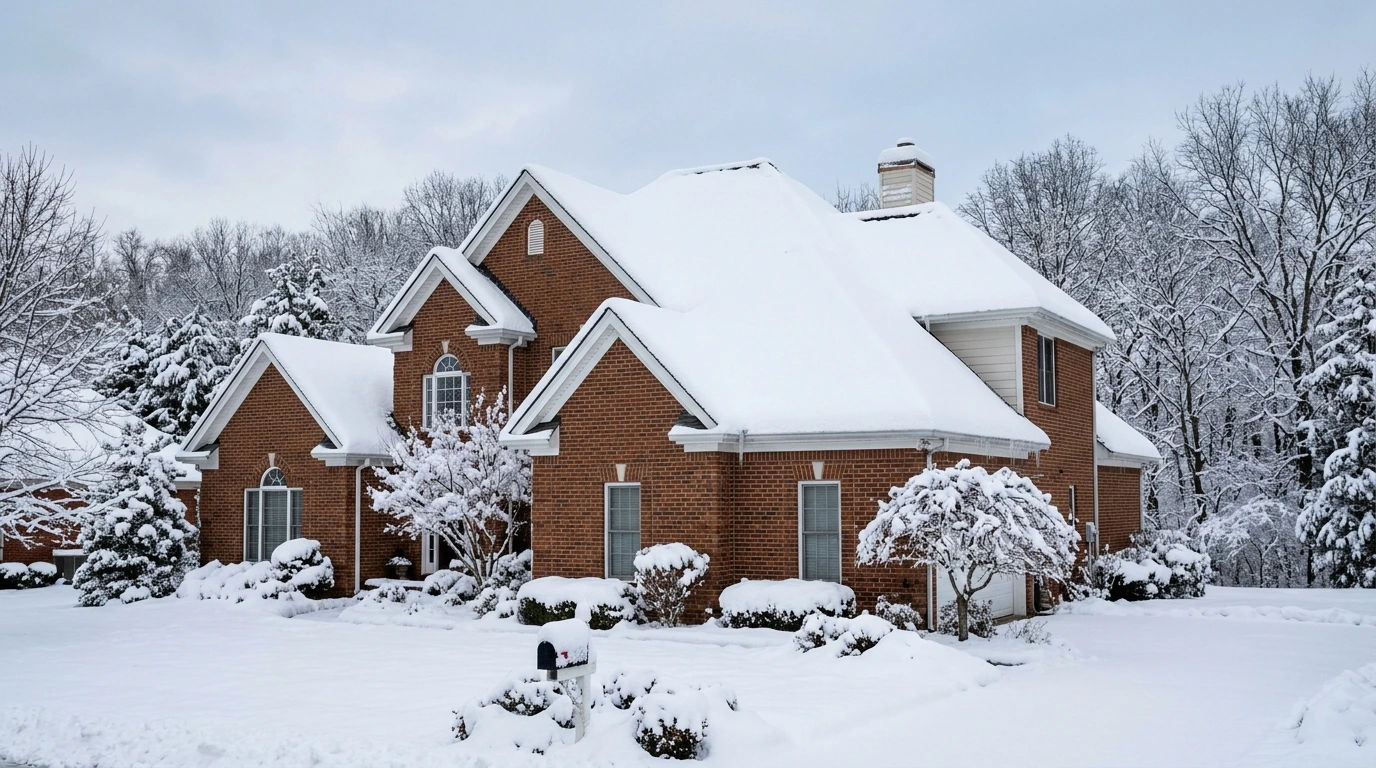
How much snow can a roof hold? Most homeowners ask this after a heavy snowfall, when the roof looks buried and every creak sounds scary. The good news is that you can check the risk with a few simple facts. In this guide, you will learn what snow weighs, which signs to watch for, and when to call a pro.
Quick Answer: How Much Snow Is Too Much for a Roof?
How much snow can a roof hold? General guidance says most roofs can handle about 20 pounds of snow per square foot. However, depth alone does not tell the story. One foot of light snow weighs far less than one foot of wet snow. Watch for sagging, cracks, and leaks, and call a roofer.
What Is a Roof Snow Load Limit?
Snow load is the weight of snow resting on your roof. Builders measure it in pounds per square foot, often shortened to psf. A roof snow load limit is the weight that a roof can carry before the structure becomes stressed.
Local building codes set the design load for new construction, and the number differs from place to place. In addition, older homes may follow older standards. According to guidance from the Maine Emergency Management Agency, a typical roof can handle about 20 pounds per square foot of added weight. Treat that number as a general guide, not a promise for your specific home. Your county building department or a roofer can tell you more.
How Much Does Snow Weigh?
Depth is only part of the answer. Water content matters more, so the type of snow changes everything. FEMA guidance, summarized by the Pacific Northwest National Laboratory, says one foot of fresh snow weighs from about 3 to 21 pounds per square foot, depending on how light or wet it is.
Light, Dry Snow
Fluffy powder holds a lot of air. As a result, a foot of it stays near the low end of the range. This type of snow rarely stresses a healthy roof.
Wet, Heavy Snow
Wet snow packs tightly and holds more water. Therefore, a foot of it can reach about 21 pounds per square foot. That single foot can approach the general 20 pound guideline on its own. Tennessee often sees this heavier, wetter kind of snow because temperatures hover near freezing.
Old, Packed Snow and Ice
Snow gets heavier as it settles, melts, and refreezes. Ice weighs even more, and Maine’s emergency agency notes that one inch of ice equals about one foot of fresh snow, or roughly 5 pounds per square foot. In addition, rain on top of snow adds weight because the snow soaks up the water.
A Simple Way to Estimate
Multiply the snow depth in feet by the weight per foot for that snow type. For example, six inches of wet, heavy snow equals about half a foot. Half of 21 is roughly 10 pounds per square foot. This is only an estimate, but it helps you judge the risk.
What Changes How Much Weight Your Roof Can Take?
Two roofs with the same snow can react very differently. Several factors play a role:
- Roof age and condition: Worn decking and weak framing carry less.
- Roof pitch: Steep roofs shed snow, while low slope and flat roofs hold it.
- Drifts and valleys: Wind and roof shapes can pile snow in one area.
- Hidden moisture: Rot from old leaks can weaken the structure.
- Previous damage: Storm damage or poor repairs can lower capacity.
- Ice buildup: Ice adds weight and traps water on the roof.
Because ice makes things worse, read our guide on ice dam prevention in Tennessee to learn how ice forms on roof edges.
Too Much Snow on Roof Signs to Watch For
Your house often warns you before a serious problem happens. Check inside and outside for these signs:
- Sagging or bowed ceilings
- New cracks in drywall or plaster, especially near corners and doors
- Doors or windows that suddenly stick or will not close
- Creaking, popping, or cracking sounds from the roof or attic
- A ridge line that dips or a roof that looks wavy
- New leaks or water stains after the storm
- Gaps or visible movement where walls meet the ceiling
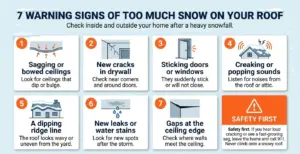
Safety first: If you hear loud cracking, see a fast-growing sag, or notice sudden shifts in your ceiling or walls, leave the home right away and call 911. Do not wait for a roofer.
Sagging Roof After Snow: What to Do
A sagging roof after snow needs a calm, careful response. Follow these steps in order:
- Keep everyone away. Move people and pets out of rooms below the sagging area.
- Check the danger level. If the sag grows or you hear loud noises, leave and call 911.
- Take photos from a safe spot. Record the roofline, the ceiling, and any cracks.
- Do not go on the roof. Wet snow and ice make it too slippery.
- Call a licensed roofer. Ask for an inspection of the roof, decking, and attic.
- Contact your insurance company. Share your photos and notes.
Snow on Roof Removal in Tennessee: When and How
Not every snowfall needs removal. Tennessee snow often melts within a few days, so light snow usually takes care of itself. However, deep, wet, or icy snow deserves a closer look. The Tennessee Emergency Management Agency also shares winter storm updates that can help you plan.
When Removal Makes Sense
- The snow is deep, wet, or packed with ice.
- You see any warning signs inside your home.
- You have a low slope or flat roof that holds snow.
- Heavy snow rests on a roof that already has damage or leaks.
Safer Ways to Remove Snow
Use a roof rake with a long handle, and stay on the ground. Pull snow from the lower edge only, and stand clear of falling snow and power lines. For anything bigger, hire a professional. A trained crew has the safety gear, the tools, and the experience to remove snow without harming your shingles.
What to Avoid
- Climbing onto the roof. Falls cause serious injuries.
- Using sharp tools. Shovels, axes, and picks can cut shingles.
- Chipping ice. This can crack shingles and damage gutters.
- Working alone on a ladder. Icy ground makes ladders unstable.
Prepare Your Roof Before the Next Snowfall
A strong, well-kept roof handles snow better. Therefore, prepare before winter arrives. Our winter roof maintenance checklist walks you through the key checks. In addition, follow these tips:
- Schedule a roof inspection in the fall.
- Repair loose, cracked, or missing shingles.
- Check flashing and seals around chimneys and vents.
- Clear gutters so melting snow can drain.
- Trim tree limbs that hang over the roof.
- Check the attic for damp insulation, stains, and sagging boards.
Common Mistakes Homeowners Make
Stress after a storm leads to quick decisions. As a result, homeowners sometimes make the problem worse. Avoid these mistakes:
- Judging by depth alone. Wet snow can be far heavier than it looks.
- Ignoring small signs. A new crack or stuck door can signal stress.
- Climbing up to shovel. This puts you at serious risk.
- Waiting too long. Rain on snow can add weight quickly.
- Skipping photos. Records help with insurance claims.
- Assuming a newer roof is safe. Hidden damage can still weaken it.
Frequently Asked Questions About Snow on Roofs
My roof has about 6 inches of snow on it. Should I panic?
Probably not. Six inches of light, fluffy snow weighs far less than six inches of wet, heavy snow. Check for warning signs inside your home, and call a roofer if you notice sagging, cracks, or leaks.
Is wet snow really that much heavier than dry snow?
Yes, it is. FEMA guidance says one foot of fresh snow can weigh about 3 pounds per square foot when it is light and dry, and about 21 pounds per square foot when it is wet and heavy. That is a big difference for your roof.
Can I just climb up and shovel my roof?
No, please do not. Wet shingles and ice make roofs very slippery, and a fall can cause a serious injury. Use a roof rake from the ground, or hire a professional.
How do I know if my roof is sagging from snow or just old?
Look for changes. Compare the roofline to older photos, and watch for new ceiling cracks, sticking doors, or new leaks after the storm. If you are unsure, a roofer can inspect the structure and tell you what is happening.
Does homeowners insurance cover roof damage from snow?
It depends on your policy. Many policies cover sudden storm damage, but coverage and limits vary. Take photos, protect your home from more damage, and call your insurance agent.
Should I knock the snow off my roof right away?
Not always. Light snow often melts on its own. However, if the snow is deep, wet, or icy, or you see warning signs, call a professional for safe removal.
Worried About Your Roof After a Snowfall?
Still asking how much snow can a roof hold before trouble starts? If something looks wrong, do not wait for the next storm. Call Veteran Roofing Systems at (931) 225-9987 or request your free estimate today. Our veteran-owned, licensed, and insured team will inspect your roof and give you clear answers.

How to Choose a Trusted Local Roofer in Middle TN
Spring and summer in Middle Tennessee bring beautiful green landscapes, but they also bring something every homeowner dreads: severe weather. […]
Read More… from How to Choose a Trusted Local Roofer in Middle TN
How Much Does Roof Leak Repair Cost in Franklin TN?
A dripping ceiling stain or a damp attic corner usually means it is time to research roof leak repair cost […]
Read More… from How Much Does Roof Leak Repair Cost in Franklin TN?
Why Attic Ventilation Matters More Than You Think in Columbia, TN
Attic ventilation in Columbia TN, rarely gets attention until a roof starts failing years earlier than expected. Most homeowners focus […]
Read More… from Why Attic Ventilation Matters More Than You Think in Columbia, TN