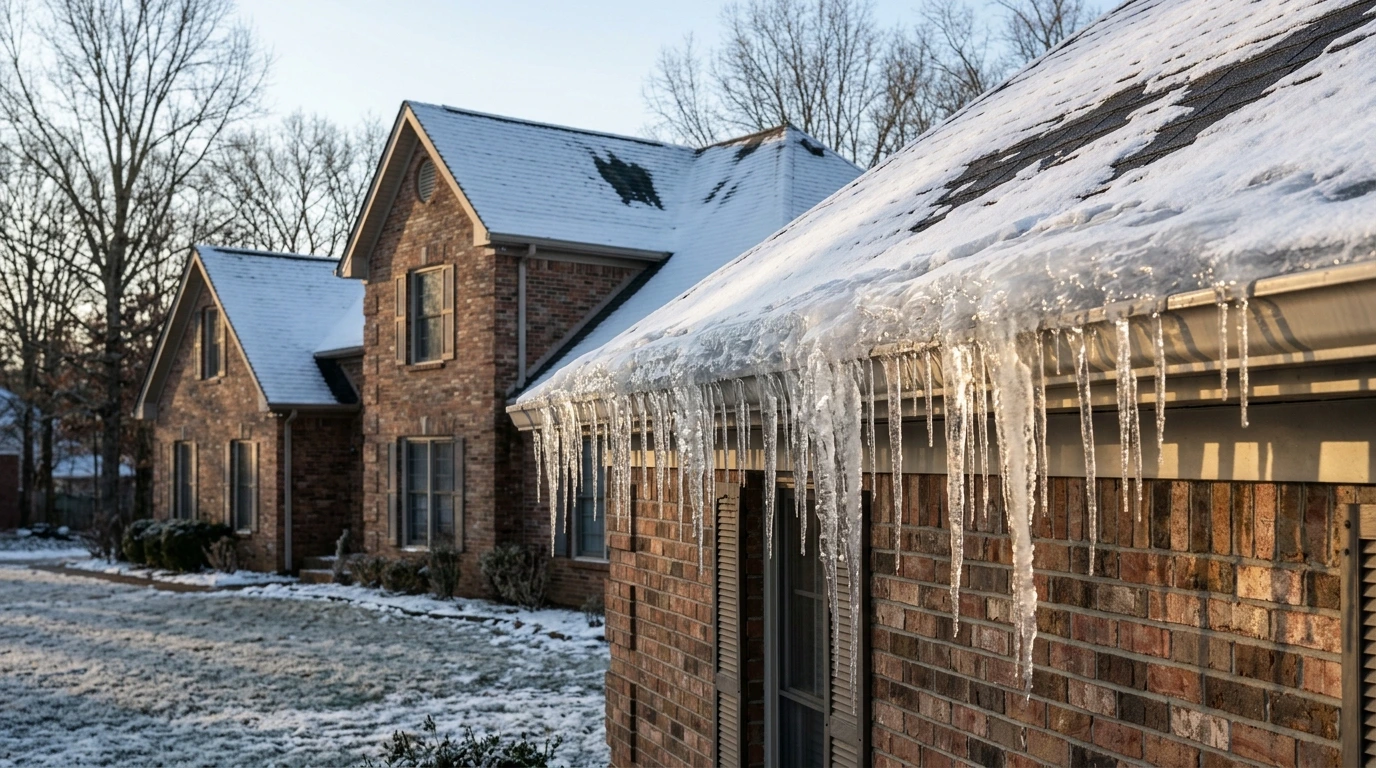
Knowing how to prevent ice dams on your roof can save you from leaks, damaged shingles, and soaked insulation. Tennessee winters swing between freezing nights and mild days, so ice dams can form faster than you expect. However, a few smart steps this fall can keep your roof safe all season.
Quick Answer: What Is the Best Way to Stop Ice Dams?
How to prevent ice dams on your roof comes down to one goal: keep your attic cold. First, seal air leaks that let warm air rise from your living space. Next, add enough attic insulation and check your vents. Then clear your gutters before winter. Finally, call a roofer if you see icicles or ceiling stains.
What Is an Ice Dam and Why Does It Matter?
An ice dam is a ridge of ice that builds up along the lower edge of your roof. It blocks melting snow from draining into your gutters. As a result, water backs up under your shingles and seeps into your attic and walls.
Over time, this trapped water can rot roof decking, soak insulation, and stain ceilings. In addition, the extra weight of ice can pull on gutters and fascia boards. Therefore, prevention matters far more than repair.
Why Ice Dams Form on Tennessee Roofs
Ice dams start inside your home, not outside. Heat escapes from your living space into the attic. Then that heat warms the roof deck and melts snow from underneath.
The melted water runs down to the cold edge of the roof, called the eave. There, the water refreezes because the eave sits outside the warm zone. Over many cycles, the ice grows into a dam.
Tennessee’s weather makes this cycle easy. Cold mornings, sunny afternoons, and freezing nights repeat often during winter. As a result, even a light snowfall can start the problem when your attic runs warm.
Warning Signs of Ice Dam Trouble
Catch problems early, and you can fix them before water gets inside. Watch for these signs from the ground and from inside your home:
- Large icicles along the gutters or eaves
- Ice built up along the lower edge of the roof
- Water stains or damp spots on ceilings and upper walls
- Peeling paint near the top of exterior walls
- Wet or compressed insulation in the attic
- Melted snow patches on one part of the roof while other areas stay covered
If you notice any of these signs, schedule a professional roof inspection soon. Small leaks can turn into larger repairs quickly.
Step-by-Step Ice Dam Prevention Plan
Follow these steps in order. Each one reduces the heat that reaches your roof deck.
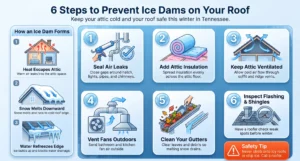
Step 1: Seal Air Leaks in the Attic Floor
First, find the gaps that let warm air rise. Common leak spots include attic hatches, recessed lights, plumbing pipes, wiring holes, and gaps around chimneys. Seal small gaps with caulk or foam, and use proper materials near flues and chimneys. The ENERGY STAR guide on the attic air sealing project explains how sealing helps reduce ice dams.
Step 2: Add or Upgrade Attic Insulation
Next, check the insulation on your attic floor. Thin, uneven, or compressed insulation lets heat escape. Add insulation evenly across the attic floor, and keep it away from hot flues and recessed light fixtures that are not rated for contact.
Step 3: Keep Your Attic Ventilated
Then, make sure air can move freely through your attic. Soffit vents bring in cold air, and ridge or roof vents let warm air out. Do not let insulation block the soffit vents. For more detail, read ENERGY STAR’s page about attic ventilation.
Step 4: Vent Fans Outdoors
Also, check where your bathroom and kitchen fans vent. If they blow moist, warm air into the attic, they add heat and moisture right where you do not want it. Connect them to vents that exhaust outside your home.
Step 5: Clean Gutters and Downspouts
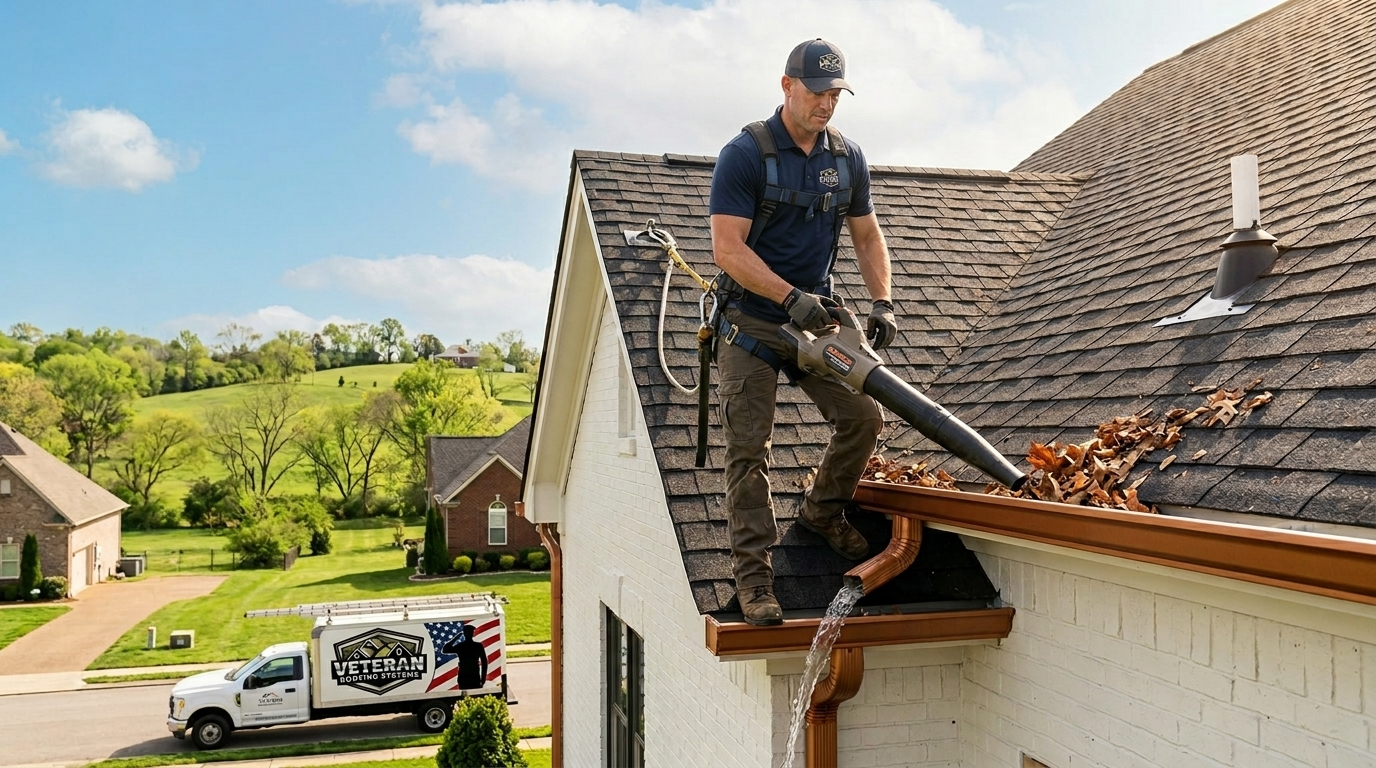
In addition, clear leaves and debris from your gutters before winter. Clogged gutters hold water, and that water freezes easily. Clear gutters give melting snow a path to drain away from your roof edge.
Step 6: Inspect Flashing and Shingles
Finally, have a roofer check your flashing, shingles, and roof edges. Damaged flashing gives water an easy way in. A trained eye can also spot weak ventilation, worn underlayment, and other risks that you may miss from the ground.
What to Do If an Ice Dam Has Already Formed
Stay calm, and put safety first. Do not climb onto an icy roof. Instead, take these safer actions:
- Use a roof rake from the ground to gently pull snow off the lower edge of the roof, and stay clear of falling snow and power lines.
- Move belongings away from any ceiling that shows a leak.
- Place a bucket under drips, and take photos for your records.
- Call a roofing professional for safe ice dam removal and an inspection.
Never chip ice with a hammer, axe, or shovel. These tools can crack shingles and damage gutters. In addition, a fall from a ladder on frozen ground can cause a serious injury. For more cold weather safety tips, review the winter weather guidance at Ready.gov.
DIY Prevention vs. Calling a Roofer
Some tasks fit most homeowners. Others need a trained crew.
You can usually handle these yourself:
- Clearing gutters from a stable ladder on dry ground
- Checking the attic for stains, damp insulation, and blocked vents
- Sealing small gaps around the attic hatch
- Using a roof rake from the ground after a snowfall
Call a roofer for these jobs:
- Ice buildup on the roof edge
- Ceiling stains or active leaks
- Damaged flashing, shingles, or gutters
- Poor attic ventilation or repeated ice dams in past winters
- Any work that requires walking on the roof
Veteran Roofing Systems is a veteran-owned, licensed, and insured roofing contractor serving Middle Tennessee. Our team knows how local weather stresses roofs, and we explain every finding in plain language.
Add Ice Dam Prevention to Your Winter Roof Routine
Ice dam prevention works best as part of a regular maintenance plan. Use our winter roof maintenance checklist to check your gutters, vents, flashing, and shingles before cold weather arrives. Then schedule a professional inspection if anything looks worn or damaged.
Common Mistakes to Avoid
Homeowners often mean well, but a few habits make ice dams worse. Avoid these mistakes:
- Climbing onto an icy roof. The risk of a fall is too high.
- Breaking ice with tools. This damages shingles and gutters.
- Adding insulation without sealing leaks. Warm air can still reach the roof deck.
- Blocking soffit vents. Insulation or storage boxes can stop airflow.
- Venting fans into the attic. Moist air adds heat and invites mold.
- Ignoring small stains. A small spot can signal a bigger problem above it.
- Waiting until midwinter. Repairs are easier before the first freeze.
Schedule Your Inspection Before the First Freeze
The best time to prepare is early fall. Crews can work safely, materials are easier to install, and you have time to fix small problems. Because Tennessee’s weather changes quickly, do not wait for the first icicle. Request a free estimate and let a trained roofer check your attic, vents, and roof edges.
Frequently Asked Questions About Ice Dams
Do I really need to worry about ice dams in Tennessee?
Yes, you can. Tennessee does not get as much snow as northern states, but freezing nights and mild days create the same melt and refreeze cycle. A little snow plus a warm attic is enough to form an ice dam.
Can I just knock the ice off my roof with a hammer?
No, please do not. Hitting ice can crack shingles, strip off granules, and damage your gutters. It also puts you at risk of a serious fall, so call a roofer instead.
Are icicles hanging off my gutters a bad sign?
Not always, but they can be a warning. Large icicles often mean heat is escaping from your attic and melting snow on the roof. If you see heavy icicles along one section, schedule a roof and attic inspection.
Will adding more attic insulation stop ice dams by itself?
Insulation helps, but it works best with air sealing and good ventilation. Warm air that leaks around hatches, wires, and vents can still heat the attic. Treat sealing, insulation, and airflow as one plan.
Can an ice dam cause a leak even if my roof is fairly new?
Yes, it can. Ice dams push water under shingles no matter how new they are, especially when the attic stays warm. A roofer can check your flashing, ventilation, and underlayment to find weak spots.
When is the best time to get my roof checked before winter?
Schedule an inspection in the fall, before the first hard freeze. Crews have more time to fix small problems, and you avoid working on a cold, icy roof. Early checks also give you time to plan any upgrades.
Protect Your Roof Before the Ice Arrives
Now that you know how to prevent ice dams on your roof, take the next step. A quick inspection can catch weak spots before winter does. Call Veteran Roofing Systems at (931) 391-3186 or request your free estimate today. Get a trusted, veteran-owned team on your side, and head into winter with confidence.

Commercial Roofing Types Explained: Pros, Cons & Costs
If you own or manage a business property in Tennessee, understanding the different commercial roofing types available today can save […]
Read More… from Commercial Roofing Types Explained: Pros, Cons & Costs
Spring Roof Maintenance Checklist for Spring Hill & Middle TN: The Ultimate 2026 Guide
Middle Tennessee winters are notoriously unpredictable. Within a single week in Maury or Williamson County, we can swing from freezing […]

Roof Insurance Claim Guide – How to File a Claim After Storm or Hail Damage
Introduction If your roof was damaged by a recent storm or hail, don’t panic.This roof insurance claim guide will help […]
Read More… from Roof Insurance Claim Guide – How to File a Claim After Storm or Hail Damage