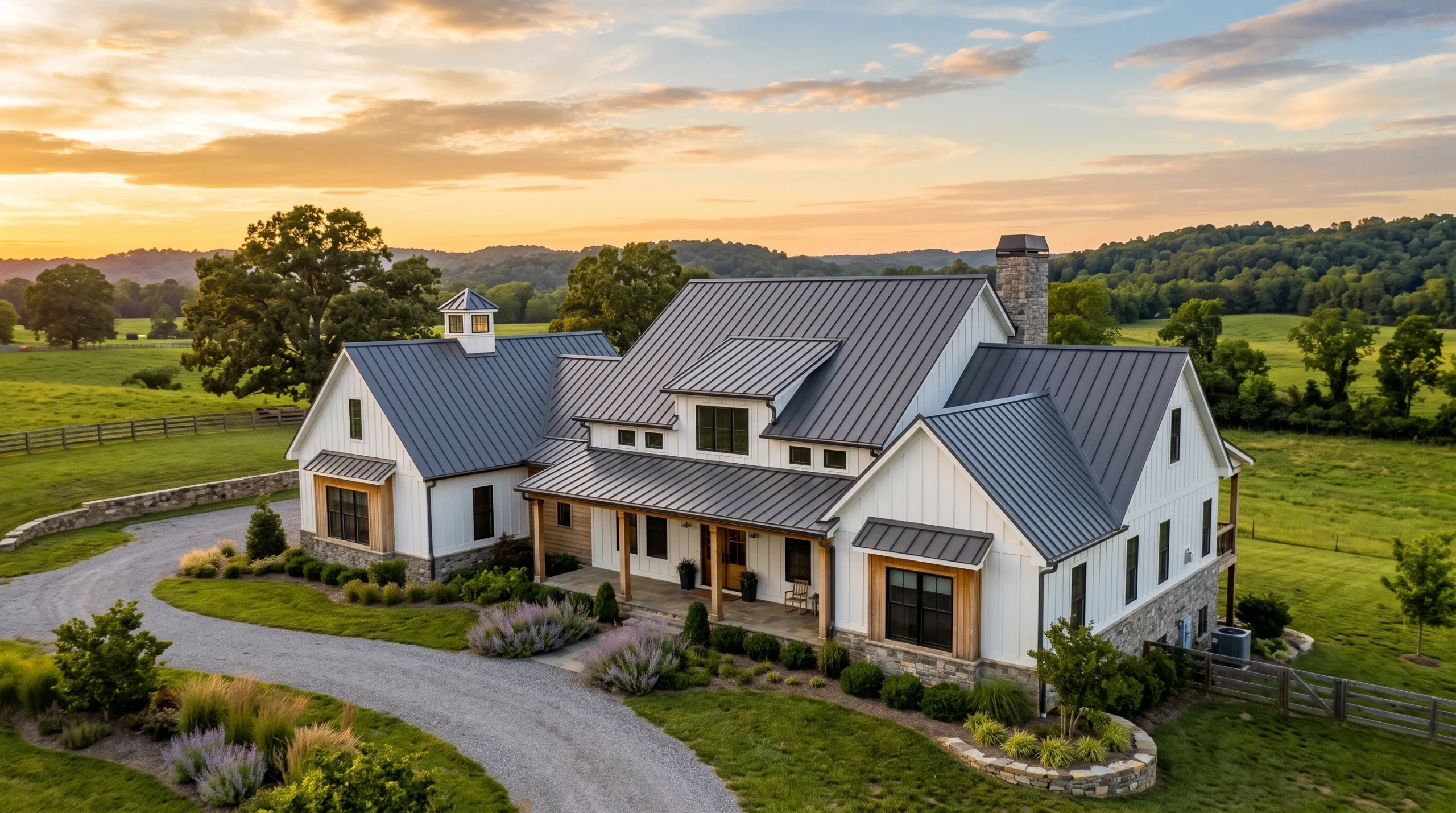
Metal roofs can last for decades when the system is installed correctly. When the workmanship is weak, the same panels can leak, oil can, or fail early. If you are evaluating metal roof installation quality after a bid, during a walkthrough, or months after a job, use this checklist to judge what you see before you approve payment or schedule a repair.
Quick answer
A quality metal roof installation shows straight panel lines, consistent seams or fastener patterns, continuous underlayment, clean flashing at every wall and penetration, and clear drainage with no ponding at valleys or eaves. Ask for manufacturer installation instructions, written warranty details, and photos of the deck and underlayment before panels go on. If lines wave, fasteners sit proud or missing, or flashing looks patched with caulk alone, pause the job and bring in a second licensed contractor. For a free on site review in Middle Tennessee, call Veteran Roofing Systems at (931) 225-9987.
Why installation quality matters more than the panel brand
Homeowners often compare gauges, coatings, and colors first. Those choices matter, but industry groups such as the Metal Construction Association consistently point to detailing and fastening as the real drivers of long term performance. A premium panel with poor underlayment, skipped ice and water protection, or crooked seams will not outperform a solid mid grade system installed to specification.
Middle Tennessee heat, hail, and wind add stress. Panels expand and contract. Fasteners and clips must allow movement without breaking the weather seal. Flashing at chimneys, skylights, and sidewalls must move with the roof. That is why a careful review of workmanship protects your investment as much as choosing metal roofing in the first place.
Still comparing materials? See the guide on metal roofing versus asphalt shingles. This article focuses on judging the install once you choose metal.
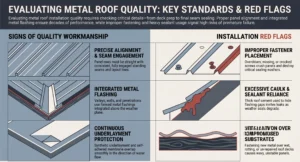
What to review before panels go up
Evaluating metal roof installation quality starts before the first panel arrives. Ask to see or photograph these stages.
Roof deck and preparation
The deck should be dry, solid, and free of soft spots. Rot, delamination, or large gaps need repair before underlayment. Uneven decking shows later as wavy panel lines. Remove old fasteners and debris so they cannot puncture new underlayment.
Ventilation and attic moisture issues should be noted before covering the deck. Trapped moisture under a sealed metal system can damage sheathing even when the exterior looks fine. Pair this check with your regular yearly roof inspection habits so problems are not sealed in place.
Underlayment and ice and water protection
Quality crews install a continuous underlayment layer suited to the manufacturer instructions. Many systems call for synthetic underlayment plus self adhered membrane in valleys, eaves, and around penetrations. Seams should lap in the water flow direction. Wrinkles, bare deck patches, or staples that tear the sheet are red flags.
Do not accept a verbal promise that underlayment is fine if you never saw it. Photos dated by stage are normal on professional jobs.
Layout, clip or fastener plan, and panel orientation
Standing seam systems usually use concealed clips on a planned spacing. Exposed fastener systems need consistent fastener lines and manufacturer approved screws with sealing washers. Ask which system you are buying and how expansion is handled. A clear layout plan reduces field improvisation that leads to oil canning and leaks.
For a process overview you can compare against your bid, see the site article on metal roofing installation for homeowners.
Checklist while panels are installed
Use this list during active work or a midday walkthrough from the ground and from safe vantage points. Do not climb a steep or wet roof. Fall hazards are real; the OSHA fall protection overview explains why trained crews use harnesses and staging, and the National Roofing Contractors Association stresses trained installation practices.
- Panel alignment. Rows should look straight across the slope. Large waves or tapering gaps at eaves suggest layout errors.
- Seam quality (standing seam). Seams should be fully engaged and consistent. Gaps, crushed seams, or uneven seam height invite water and wind entry.
- Fastener pattern (exposed fastener). Screws should sit in the flat or rib location the manufacturer specifies, not randomly. Missing washers, overdriven screws that crush the panel, or underdriven screws that leave gaps all create leak paths.
- Cut edges and oil canning. Minor oil canning can occur on wide flats, but severe buckling often traces to overdriven fasteners, uneven substrate, or panels forced into place. Cut edges should be clean and treated per the product guide when required.
- Penetrations. Pipe boots, curb flashings, and skylight kits should be metal compatible systems, not a thick bead of roof cement as the only seal.
- Transitions. Ridges, hips, valleys, and wall intersections need formed metal flashings that match the panel system. Caulk is a sealant helper, not a substitute for flashing.
- Eaves, rakes, and drip edge. Edge metal should be continuous and tied into the underlayment so wind driven rain cannot run behind the panels.
- Cleanup and magnet sweep. Screws and cuttings left on the roof or in gutters scratch coatings and clog drainage. Professional crews sweep and use magnets on lawns and drives.
Storm resistance also depends on attachment details. Guidance from the Insurance Institute for Business and Home Safety stresses proper fastening and secondary water barriers for high wind regions. Severe thunderstorms in Middle Tennessee still punish weak clips and incomplete seams.
How to judge flashing and water management
Most metal roof leaks start at details, not in the middle of a clean field of panels.
Valleys
Valleys should show continuous metal valley flashing with proper overlap and clear paths for water. Panels should not be cut so short that water dumps onto exposed fasteners. Debris traps in valleys are a maintenance issue, but a valley with no flashing under the panels is an installation failure.
Chimneys and sidewalls
Counterflashing should integrate with the wall cladding where possible. Step flashing or continuous wall flashing must sit above the weather plane of the panel. Relying on surface sealant alone around a chimney is a common defect.
Gutters and drainage
Gutters should collect water without forcing it behind fascia. Downspouts need clear discharge away from the foundation. Standing water on low slope metal sections after rain points to slope or detailing problems that deserve a prompt roof repair assessment.
Interior and attic checks after install
Evaluating metal roof installation quality is incomplete without a look from below when access is safe.
– Daylight at ridges or eaves can mean incomplete sealing.
– Damp insulation or staining near penetrations after the first hard rain needs investigation.
– Condensation under panels can relate to ventilation, not only leaks. Document conditions with photos and dates.
Documents and warranties that prove a quality job
Ask for a packet that includes:
– Manufacturer product data and installation instructions for the exact panel and clip system used
– Color and gauge confirmation matching the signed proposal
– Underlayment product names
– Written workmanship warranty terms and what voids them
– Manufacturer warranty registration steps and who files them
– Proof of license and insurance for the installing company
Compare every proposal against the same document list so you are judging workmanship, not brand promises alone. Veteran Roofing Systems installs residential and commercial metal systems across Columbia, Franklin, Spring Hill, Brentwood, and nearby communities as a licensed Tennessee contractor.
Red flags that mean you should pause or call for help
Stop and escalate if you see any of the following:
– Crews installing panels over wet or soft decking
– No underlayment visible on a tear off job
– Fasteners of unknown type, or wood screws used in place of roofing screws with washers
– Large amounts of sealant used to hide gaps at flashings
– Panels left unsecured overnight in windy weather without a plan
– Refusal to provide manufacturer instructions or warranty paperwork
– Pressure to pay the full balance before a final walkthrough
For weather related damage after a storm, document conditions and review the metal roof safety guide for lightning and hail. Installation defects and storm damage can look similar from the ground, so a trained eye matters.
Final walkthrough: questions to ask before you sign off
Use these questions on the last day:
- Can we walk the eaves and review flashings from a safe ladder position or with photos?
- Were any deck repairs made, and can I see the photos?
- Which underlayment was installed in valleys and eaves?
- How are expansion and contraction handled on this panel profile?
- What maintenance do you recommend in year one?
- Who do I call if a leak appears during the first rain cycle?
A confident contractor answers plainly. Vague replies or hostility are reasons to withhold final payment until a third party inspection is complete.
When to schedule a professional quality review
Hire a licensed local roofer for an independent review when you bought a home with a newer metal roof and no paperwork, when a recent install already shows streaks or leaks, when an insurer questions workmanship, or when you want a second look at competing bids. Veteran Roofing Systems can inspect residential metal systems and discuss repair or roof replacement options when a detail fix is not enough.
Call to action
If you want help evaluating metal roof installation quality on a new bid or an existing roof in Middle Tennessee, schedule a free inspection with Veteran Roofing Systems. Call (931) 225-9987 or use the free estimate form. Bring your proposal, panel brand, and any photos of the deck or underlayment. Clear documentation and an honest checklist beat guesswork every time.
Frequently Asked Questions
Q: How can I tell if my metal roof was installed correctly?
A: Look for straight panel lines, consistent seams or fastener patterns, formed metal flashings at walls and penetrations, and continuous underlayment at eaves and valleys. Ask for manufacturer instructions and photos from before panels went on. Waving panels, missing washers, or caulk used in place of flashing all call for a professional inspection.
Q: What are common signs of a poorly installed metal roof?
A: Common signs include leaks at penetrations, loose or overdriven fasteners, severe oil canning, incomplete ridge or eave trim, and attic water stains after ordinary rain. Debris left on the roof and unsealed cut edges also deserve a documented inspection before small issues grow.
Q: Does standing seam install differently from exposed fastener metal?
A: Yes. Standing seam systems usually rely on concealed clips and locked seams, while exposed fastener systems use screws with sealing washers through the panel. Evaluating metal roof installation quality means checking the details for the system you bought, not a generic list alone.
Q: Should I climb on my metal roof to inspect it?
A: No. Metal panels can be slippery, and walking them can void warranties or dent the finish. Inspect from the ground, from a stable ladder at the eave if you are comfortable, and from the attic. Leave full roof walks to insured professionals with fall protection.
Q: How soon after installation should I check for leaks?
A: Watch the first few significant rain events and check ceilings and the attic afterward. Early leaks often point to flashing or penetration details. Report issues in writing while workmanship coverage is easiest to enforce.
Q: Can a bad metal roof installation be fixed without a full tear off?
A: Sometimes. Isolated flashing repairs, fastener replacements, or trim corrections can solve limited defects. Widespread layout errors or wrong underlayment may need larger corrective work. Only an on site inspection can separate a detail fix from a broader reset.
Q: Who should evaluate metal roof installation quality in Middle Tennessee?
A: Choose a licensed, insured roofing contractor with real metal install experience. Ask for references, proof of license, and familiarity with your panel brand. Veteran Roofing Systems serves Columbia, Franklin, Spring Hill, Brentwood, and nearby communities and can review installs or provide a second opinion.
Call Us Now: +1 931-225-9987
How to Choose Roofers in Columbia TN: A Homeowner’s Guide
Learning how to choose roofers in Columbia, TN protects your home, your family, and your budget. A roof replacement or […]
Read More… from How to Choose Roofers in Columbia TN: A Homeowner’s Guide
Roof Replacement in Franklin TN: Navigating HOAs and Historic Standards
The architectural landscape of Franklin, Tennessee, is a masterclass in Southern elegance. From the historic charm of downtown estates to […]
Read More… from Roof Replacement in Franklin TN: Navigating HOAs and Historic Standards
7 Warning Signs You Need a Roof Replacement in Columbia, TN
Homeowners across Maury County often wait too long to address roof problems, and that delay usually costs more in the […]
Read More… from 7 Warning Signs You Need a Roof Replacement in Columbia, TN