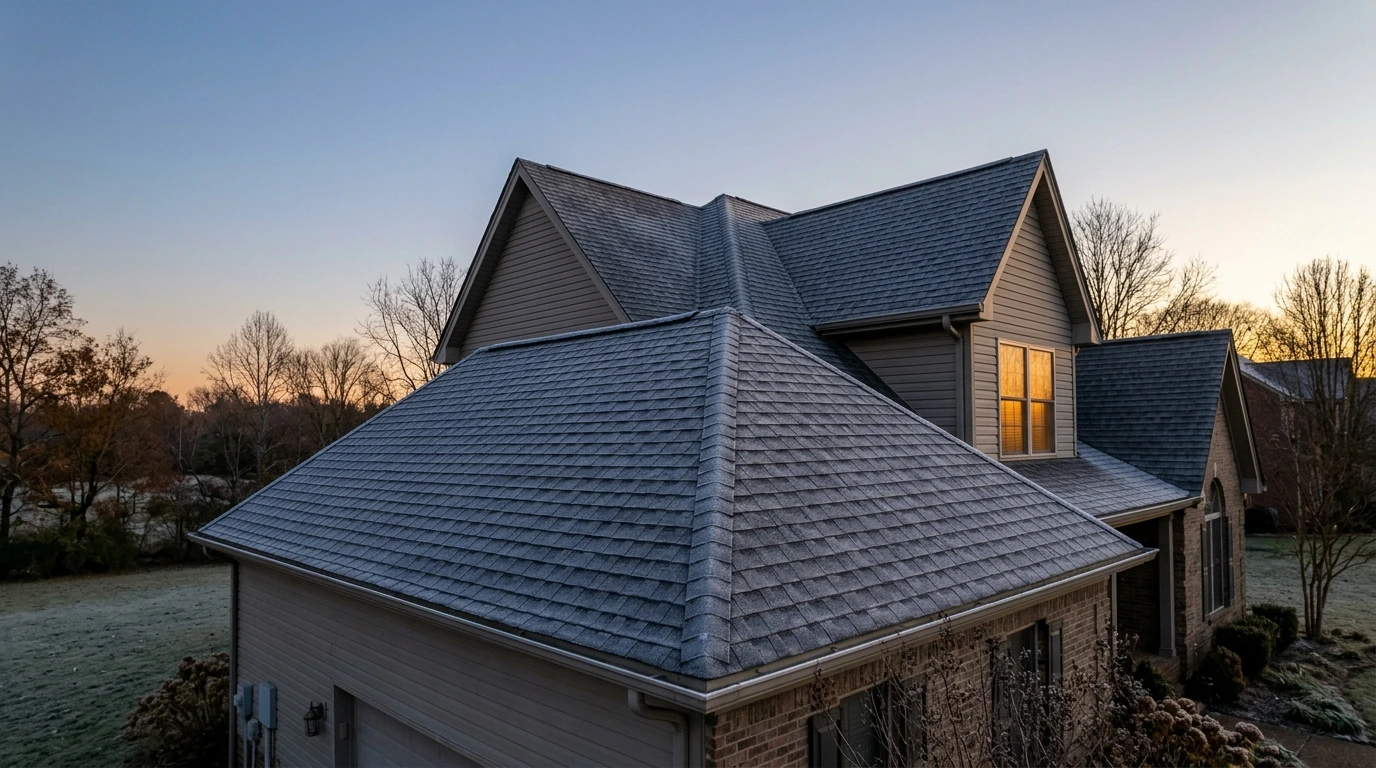
Roof popping noise in cold weather is one of the most common worries we hear from Middle Tennessee homeowners. It usually starts when a warm fall afternoon gives way to a freezing night.
Short answer: Popping and cracking on cold nights is usually normal thermal expansion and contraction as roof materials shrink and shift. Repeated loud cracking, a sagging roofline, visible gaps, or any sign of a leak are different. Those signs call for a professional inspection.
From late October into winter, a sudden temperature drop after warm days makes these sounds common across our area.
Key Takeaways – Popping sounds at night are usually thermal contraction, not damage. – Sagging, loose shingles, stains, or sounds that continue in mild weather are warning signs. – Noise alone cannot confirm damage, so check from the ground and call a pro if in doubt.
Why Does My Roof Pop When It Gets Cold?
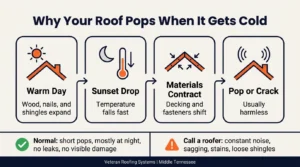
Your roof pops because wood, nails, shingles, and metal shrink at different rates as the temperature falls. Thermal contraction in roofing is the shrinking of building materials as they lose heat, which lets them shift and rub with a sharp sound.
Wood Framing and Decking
Rafters and trusses support plywood or OSB sheathing, together called roof decking. As cold air pulls heat from the wood, it contracts slightly and slides against nails and neighboring boards. That movement is the pop.
Shingles, Nails, and Metal
Shingle contraction happens as asphalt cools and tightens against the decking. Metal roof panels expanding and contracting can tick, creak, or pop as they slide on fasteners. Roof flashing around vents and chimneys can do the same.
Roof Cracking at Night in Cold Weather
Roofs sound louder at night because the sun stops heating the surface and the temperature drops fast. Materials contract in a short window, and a quiet house makes every sound seem bigger.
Homeowners often search “roof cracking at night cold” after the first freeze, and rapid cooling is usually the cause. Middle Tennessee adds big swings between warm days and freezing nights, plus the occasional freeze and thaw cycle. Roof creaking and popping sounds at night typically settle down as temperatures stabilize.
Before blaming the roof, make sure the noise is not coming from inside. If you hear scratching, thumping, or movement, read what to do about loud noises coming from your attic. Roof sounds are sharp and brief. Animal sounds tend to move around.
Normal vs Warning Signs: Is My Roof Okay?
Normal roof noise is brief, follows a temperature drop, and leaves no visible change. Warning signs involve visible damage, moisture, or sounds that do not follow the weather. A single roof popping noise in cold weather is rarely urgent.
| Sign | Normal | Warning Sign |
| Sound | A few pops or creaks as the roof cools | Constant cracking or grinding, even in mild weather |
| Timing | Evening or early morning temperature drop | Getting louder over weeks |
| Roofline | Straight and even | Sagging or bowed decking |
| Shingles | Flat and sealed | Loose shingles, lifted tabs, exposed nails |
| Attic | Dry, with no stains | Damp insulation, stains, or moisture in attic |
| Ceilings | Clean | New spots, drips, or peeling paint |
What Makes Roof Popping Noise in Cold Weather Worse?
Poor attic ventilation, nail pops, aging shingles, ice, and loose fasteners can all make cold-weather noise louder or more frequent.
Poor Attic Ventilation
Weak attic ventilation lets attic temperature swing hard and traps humid air. The U.S. Department of Energy explains moisture control and ventilation in a durable attic. After the first hard freeze, we often find frost on the underside of roof decking and on nail tips in poorly vented attics.
Melting frost can drip and look like a leak. Find out whether you have a roof leak or attic condensation before paying for repairs.
Nail Pops
Nail pops happen when a nail backs out of the decking, often as wood shrinks and moves. A raised nail head can lift a shingle and let water in, so it is worth fixing.
Aging Shingles
Older shingles are brittle, so they crack and lift more easily as they contract. Read how Tennessee weather affects roof lifespan to judge whether yours is nearing the end.
Ice and Metal Panels
Ice on roof surfaces adds weight and bonds to shingles, and it can crack loudly as it shifts or melts. Our area sees occasional ice storms, so review roof problems after an ice storm.
On metal roofs, loose fasteners let panels move more and tick more. Learn how metal roof panels are fastened to see why that matters.
What Can I Check Safely From the Ground and the Attic?
Check from the ground and from inside the attic. Never climb on a cold or frozen roof. The National Roofing Contractors Association advises homeowners to inspect only from ground level because the fall risk is too great.
Use binoculars to look for loose shingles, missing pieces, or bent roof flashing. In the attic, use a flashlight to look for damp insulation, stains on the roof decking, or daylight through the boards. Photograph anything unusual. For a clear answer, schedule a professional roof inspection.
Safety note: Noise alone cannot confirm damage. Never walk on a frozen or icy roof.
When Should I Call a Roofer?
Call a roofer when the noise comes with visible damage, moisture, or changes that persist. Knowing what emergency roof repairs can cost helps you act early, before a small issue turns urgent.
Call if you notice:
- A sagging roofline or bowed decking
- Loose shingles, exposed nails, or damaged roof flashing
- Stains, drips, or moisture in attic spaces after a freeze
- Cracking that continues in mild weather or keeps getting louder
- Damage after an ice storm
Small problems are easier to fix when found early. Our crews handle professional roof repair across Middle Tennessee.
How Veteran Roofing Systems Inspects Cold-Weather Roof Noise
We start by asking when the noise happens, how long it lasts, and where it seems to come from. Outside, we check shingles, flashing, vents, and fasteners. In the attic, we check decking, nail tips, insulation, and ventilation.
We explain what we find in plain language. If your roof is fine, we tell you so. Veteran Roofing Systems has served Middle Tennessee for 20 years in business under license 82796.
FAQs
My roof makes loud popping noises at night when it’s freezing. Is my roof about to fail?
Probably not. Loud pops on freezing nights are usually wood, nails, and shingles contracting as the temperature drops. A roof does not fail from noise alone. Worry if you also see sagging, loose shingles, stains, or leaks, or if the sounds keep getting louder. Then book an inspection.
Why does my roof crack and pop right after the sun goes down in winter?
Because the sun stops warming the roof and the surface cools quickly. Wood decking, nails, and shingles contract at different rates, so they shift and pop. The house is also quieter at night, so you notice the sounds more. This is normal on cold evenings.
Is it normal for my new roof to make noise in cold weather?
Yes, it can be. New decking and shingles contract in the cold like any other roof, so some popping is usually harmless. If you also notice lifted shingles or leaks, call your installer, because workmanship issues may be covered by a warranty.
Can a popping roof lead to leaks?
The popping itself does not cause leaks, but the problems behind it can. Raised nails, cracked shingles, or damaged flashing can let water in. If you see stains, drips, or moisture in the attic after a cold snap, schedule an inspection promptly.
Do metal roofs make more noise in the cold?
Often, yes. Metal panels expand and contract more than shingles, so ticking and popping are common as temperatures change. That is normal. Loose fasteners or damaged panels can make it louder, so have a roofer check if the sounds are sharp, constant, or paired with leaks.
Should I go on the roof to check what’s making the noise?
No. A cold roof can be frozen, slick, and dangerous, even when it looks dry. Stay on the ground and use binoculars, then check the attic with a flashlight. If you want a closer look, let a roofer do it with proper safety gear.
How do I tell the difference between roof noise and something in my attic?
Roof noise is sharp, brief, and tied to temperature changes. Animals in an attic usually make scratching, scurrying, or thumping sounds that move around and can happen in mild weather. If the sound moves or seems alive, treat it as an attic problem and call a professional.
How long does cold-weather roof popping usually last each night?
It usually comes in bursts during the temperature drop after sunset and fades within a few hours. It can repeat on nights with big swings. Noise that lasts all day, grows louder, or continues in mild weather deserves a closer look.
Final Thoughts
Roof popping noise in cold weather is usually just materials shrinking after a temperature drop. Watch for sagging, loose shingles, stains, or sounds that keep growing. If something seems off, request a free roof inspection and we will tell you honestly what we find.
8 Signs You Need a Storm Damage Roof Inspection in Brentwood, TN Right Now
After a rough storm rolls through Williamson County, scheduling a storm damage roof inspection Brentwood TN homeowners can trust should […]
Read More… from 8 Signs You Need a Storm Damage Roof Inspection in Brentwood, TN Right Now

What To Do If You Hear Loud Noise In Your Attic
Hearing a loud noise in your attic can be alarming for any homeowner. Homes in Middle Tennessee, from Columbia and […]
Read More… from What To Do If You Hear Loud Noise In Your Attic

How to Choose a Trusted Local Roofer in Middle TN
Spring and summer in Middle Tennessee bring beautiful green landscapes, but they also bring something every homeowner dreads: severe weather. […]
Read More… from How to Choose a Trusted Local Roofer in Middle TN