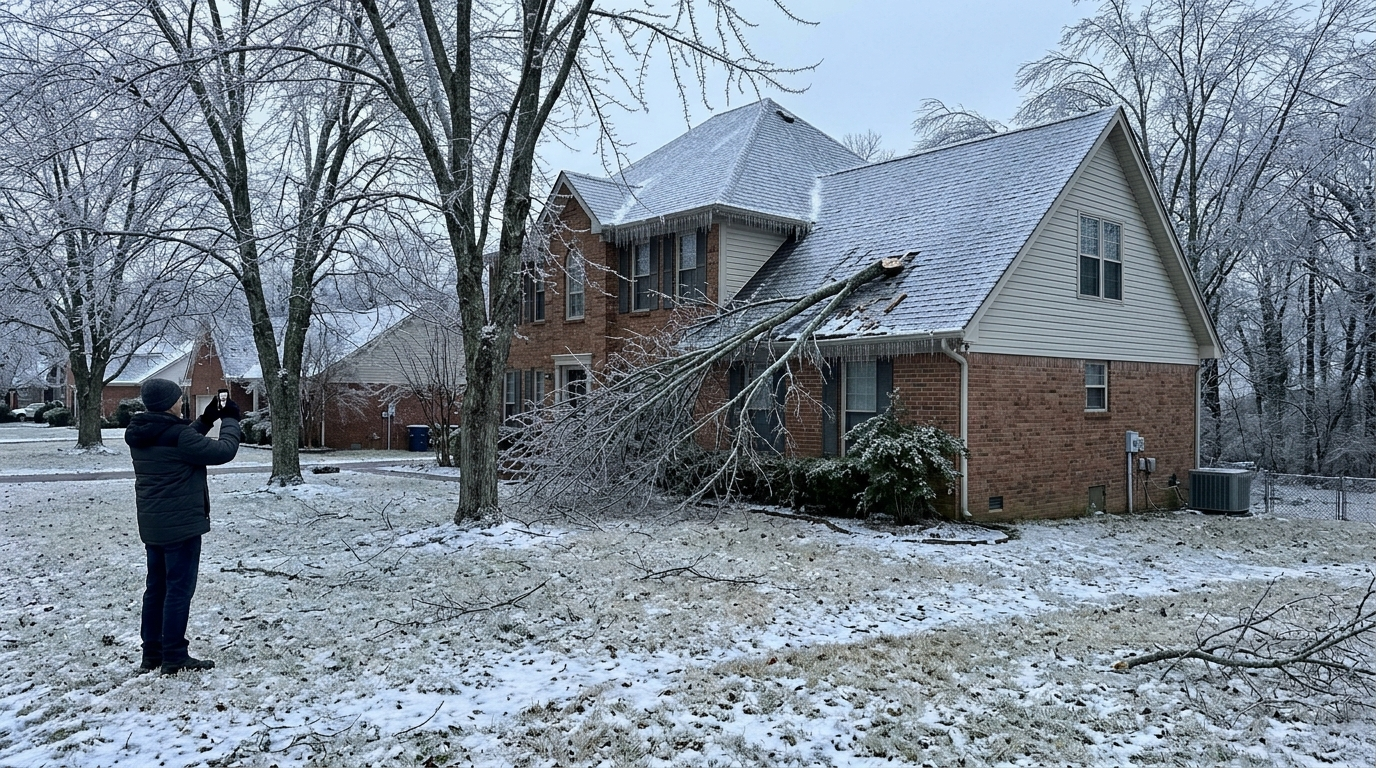
Is ice storm damage covered by insurance? In many cases, yes, when the damage is sudden and accidental, such as a heavy limb crashing through a roof or falling ice cracking shingles. Coverage still depends on your homeowners insurance policy, the cause of the damage, and the condition of your roof before the storm.
Late October is a good time to read your policy. In late January 2026, a major winter storm hit Tennessee, and the state emergency management agency reported that the event was affecting all 95 counties. Ice on trees and power lines caused widespread damage. Preparing before the next ice storm makes any claim easier.
Key Takeaways
- Sudden and accidental ice storm damage, such as a fallen tree or a storm-opened roof, is often covered. Wear and tear usually is not.
- Your deductible, your policy type (ACV or RCV), and your roof’s age and condition all affect what you receive.
- Photos, fast reporting, and temporary repairs protect your claim. Wait for your insurer before permanent repairs.
Is Ice Storm Damage Covered by Insurance? What Usually Counts
Most standard homeowners policies cover ice storm damage that is sudden and accidental. A covered peril is a cause of loss your policy protects against, such as wind or falling objects. The Tennessee Department of Commerce and Insurance says damage from wind, wind-driven rain, trees, and other falling objects is typically covered under most standard policies, according to its consumer insurance tips.
Common examples include shingles or decking damaged by falling limbs, a roof opening caused by a fallen tree, and interior water damage that follows a storm-created opening. Ice accumulation adds heavy weight to branches, which is why Tennessee ice storms bring down so many trees.
Usually Covered vs Often Not Covered
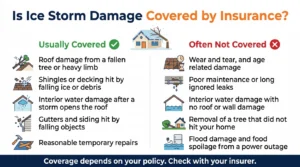
| Usually Covered | Often Not Covered |
| Roof damage from a fallen tree or heavy limb | Wear and tear and age-related deterioration |
| Shingles or decking damaged by falling ice or debris | Damage tied to poor maintenance or long-ignored leaks |
| Interior water damage after a storm opens the roof | Interior water damage when the roof and walls are undamaged |
| Gutters and siding hit by falling objects | Removal of a fallen tree that did not hit your home |
| Reasonable temporary repairs to prevent more damage | Flood damage and food spoilage from a power outage |
| Additional living expenses, if your policy includes them | Permanent repairs made before your insurer inspects |
Every policy differs, so treat this table as a starting point and confirm details with your insurer.
Does Homeowners Insurance Cover Ice Dams?
Sometimes, depending on your policy wording and what caused the water to get in. An ice storm is freezing rain that coats trees, power lines, and roofs. An ice dam is a ridge of ice at the roof edge that forms when melting snow refreezes and traps water behind it.
Some insurers treat sudden water damage from an ice dam as covered. Others deny it when they find poor attic insulation, weak ventilation, or long-term neglect. Ice dams are less common in Middle Tennessee than in colder states, but they can follow a snowy ice event.
If water is already coming in, read our guide on a roof leak after an ice storm and ask your insurer how it handles ice dam claims.
What Happens if a Tree Falls on Your Roof During an Ice Storm?
Damage to your roof from a fallen tree is usually covered, but tree removal may not be. Homeowners often search “tree fell on roof ice storm insurance” for this reason: the answer depends on where the tree landed.
The Tennessee Department of Commerce and Insurance says removal of a fallen tree is typically not covered when the tree does not land on and damage your home. When a tree does hit your home, some policies pay for removal up to a set limit, so ask your insurer about your policy limits. If a tree has damaged the structure, stay out of the area and call emergency services.
Why Do Ice Storm Claims Get Denied?
Most claim denials trace back to wear and tear, roof age, late reporting, missing documentation, or maintenance issues. The wear and tear exclusion means your policy does not pay for ordinary aging. TDCI notes that damage must be sudden and accidental for most policies to pay, while problems from age and weathering are excluded.
So, is ice storm damage covered by insurance when your roof is already old? Often only the storm-caused part is. An insurance adjuster may separate new damage from older wear, and depreciation can reduce your payment. See how Tennessee storms affect roof lifespan for more on roof age.
Other Common Reasons for Denial
- Late reports: your policy may set a claim deadline.
- Missing documentation: no photos or records of the damage.
- Maintenance issues: clogged gutters or ignored leaks.
- Unclear cause: not every stain is storm damage. Learn how to tell a leak or attic condensation.
What We See in the Field
During roof inspections after storms, we often find shingle damage that homeowners cannot see from the ground. Water stains sometimes appear days after the storm, and we have seen claims delayed because no photos were taken before cleanup.
An ice storm roof damage insurance claim Tennessee homeowners file is easier to support when you can show the damage was sudden and the roof was maintained. TDCI also reported that complaints rose after Winter Storm Fern, with claim delays, claim denials, and unsatisfactory settlement offers topping its 2025 complaint list.
Deductibles, ACV and RCV Explained Simply
A deductible is the amount you pay before insurance pays. Some policies use a flat deductible, and others use a percentage deductible based on your home’s insured value. Your declarations page shows which you have.
Actual cash value (ACV) is the cost to repair or replace something minus depreciation. Replacement cost value (RCV) is the cost to repair or replace it with similar materials without subtracting depreciation. Some policies pay ACV first and release the rest after repairs are done.
Because of depreciation, roof age can shrink an ACV payout. Policy limits also cap the total payment. We avoid dollar figures here because every policy is different.
Your First 48 Hours After an Ice Storm
Safety note: never walk on an icy roof. Stay away from downed power lines and anything touching them. Call emergency services if you see structural danger.
- Get safe. Move away from damaged rooms and falling ice.
- Take photos and video from the ground before anything is moved.
- Protect your home. Use a tarp and make temporary repairs to limit water intrusion, but save permanent repairs for after your insurer inspects. See what emergency roof repairs can cost.
- Call your insurance company and get a claim number. Report the damage promptly.
- Keep every receipt for tarps, supplies, and mitigation work, and write down who you spoke with and when.
The full filing process is covered in our storm and hail claim guide.
What to Document for Your Claim
- Wide and close photos of roof damage, fallen trees, and ceiling or wall stains
- The date and time of the storm and when you found the damage
- New photos of water stains days later, since they can grow
- A list of damaged belongings
- Receipts for temporary repairs
- Your roof’s age and any past repair or maintenance records
- Names, dates, and claim numbers from every call
Should You Call a Roofer or Your Insurance Company First?
Call your insurance company first to report the damage, then call a roofer the same day if your roof needs protection. Your insurer decides coverage. A roofer can protect your home and document the damage.
Some homeowners want a professional roof inspection before filing to understand how serious the damage is. That is reasonable, as long as you still report the claim promptly. Be careful with door to door contractors who demand large upfront payments, and check licenses and references before signing.
How Veteran Roofing Systems Helps After Ice Storms
Veteran Roofing Systems serves homeowners across Middle Tennessee, including Columbia, Franklin, Spring Hill, and Brentwood. Our team has 20 years in business of roofing experience and holds license 82796. From storm inspections to temporary protection, repairs, and full replacement, our crews document the damage with photos and a clear report.
Veteran Roofing Systems is not an insurance company. Your insurer decides claim approval and outcomes, so we cannot guarantee them,but we can help you document damage and fix your roof. Learn more about our roofing insurance claim help.
Frequently Asked Questions
A tree branch fell on my roof during the ice storm. Will my insurance cover it?
Often yes, if the branch damaged your roof, because falling objects are commonly covered perils. Take photos, tarp the opening, and report it quickly. Your insurer decides coverage based on your policy, so ask about tree removal and policy limits. Removing a tree that did not hit your home is often not covered.
My roof started leaking after the ice storm. Will my insurance deny it because of the age of the roof?
Not always, but age can matter. Insurers usually separate sudden storm damage from wear and tear. If ice or a limb created the opening, that part may be covered, though depreciation can lower the payment under actual cash value. A roof inspection that documents storm damage helps your claim.
Is ice dam damage covered by homeowners insurance?
Sometimes. Coverage depends on your policy and what caused the water to enter. Sudden water damage may be covered, while damage tied to poor insulation, weak ventilation, or long-term neglect is often denied. Ask your insurer how your policy treats ice dams before winter, and document everything if water appears.
Do I have to pay my deductible if the repair costs less than my deductible?
You pay the repair cost yourself, since the insurer typically pays only the amount above your deductible. In that case, a claim may not pay anything. Still document the damage in case more problems appear later, and check whether your policy uses a flat or percentage deductible.
How long do I have to file an ice storm claim?
Your policy sets the deadline, so report damage as soon as possible. TDCI says your policy may require notice within a certain time frame. Tennessee law may also limit how long you have to sue over a denial VERIFY WITH TN DEPT OF COMMERCE AND INSURANCE. Ask your agent for your exact claim deadline.
Should I call my insurance company or a roofer first?
Call your insurance company first to report the damage, then call a roofer the same day for safety. Your insurer decides coverage, while a roofer can protect the roof and document damage. Do not make permanent repairs until your insurer has inspected, unless they tell you otherwise.
Will my rates go up if I file an ice storm claim?
Possibly, but it depends on your insurer, your claim history, and other factors. Rules and practices vary by company. Ask your agent how a claim could affect your premium before filing, and do not skip reporting real damage because of that worry, since late reports can hurt your claim.
What if my insurance denies my ice storm claim?
Ask your insurer for the reason in writing, review your policy language, and send more documentation if you have it. TDCI’s Consumer Insurance Services team mediates complaints between consumers and insurers, and you can file a complaint with the department. A roof inspection report with photos can support your case.
Final Thoughts
So, is ice storm damage covered by insurance? Often yes, when the damage is sudden and accidental, but your policy, deductible, and roof condition shape the outcome. Read your policy now, keep roof records, and know who to call before the next storm. If you want a clear picture of your roof, you can request a free roof inspection from Veteran Roofing Systems.

How Tennessee Storms Affect Roof Lifespan
How Tennessee Storms Affect Roof Lifespan: What Homeowners Need to Know? Tennessee is famous for its rolling hills, warm summers, […]
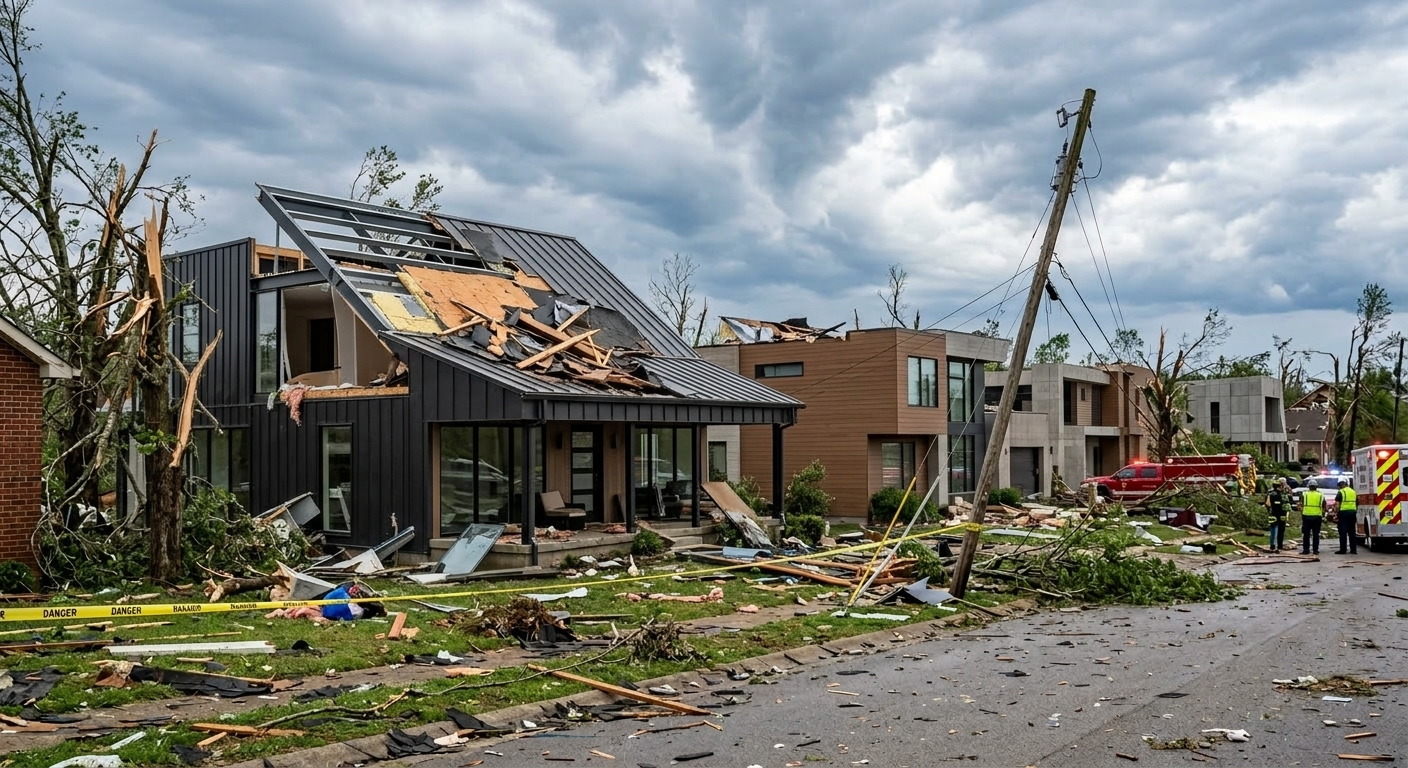
Emergency Roof and Siding Tarping in Maury County: Local Help After the Tornado
The sudden tornado that just swept through Maury County has left many of our friends, neighbors, and local businesses dealing […]
Read More… from Emergency Roof and Siding Tarping in Maury County: Local Help After the Tornado

Local Commercial Roofers: Ultimate Roof Inspection Guide
If you own a home or run a business in Tennessee, your roof is one of your biggest investments. Working […]
Read More… from Local Commercial Roofers: Ultimate Roof Inspection Guide