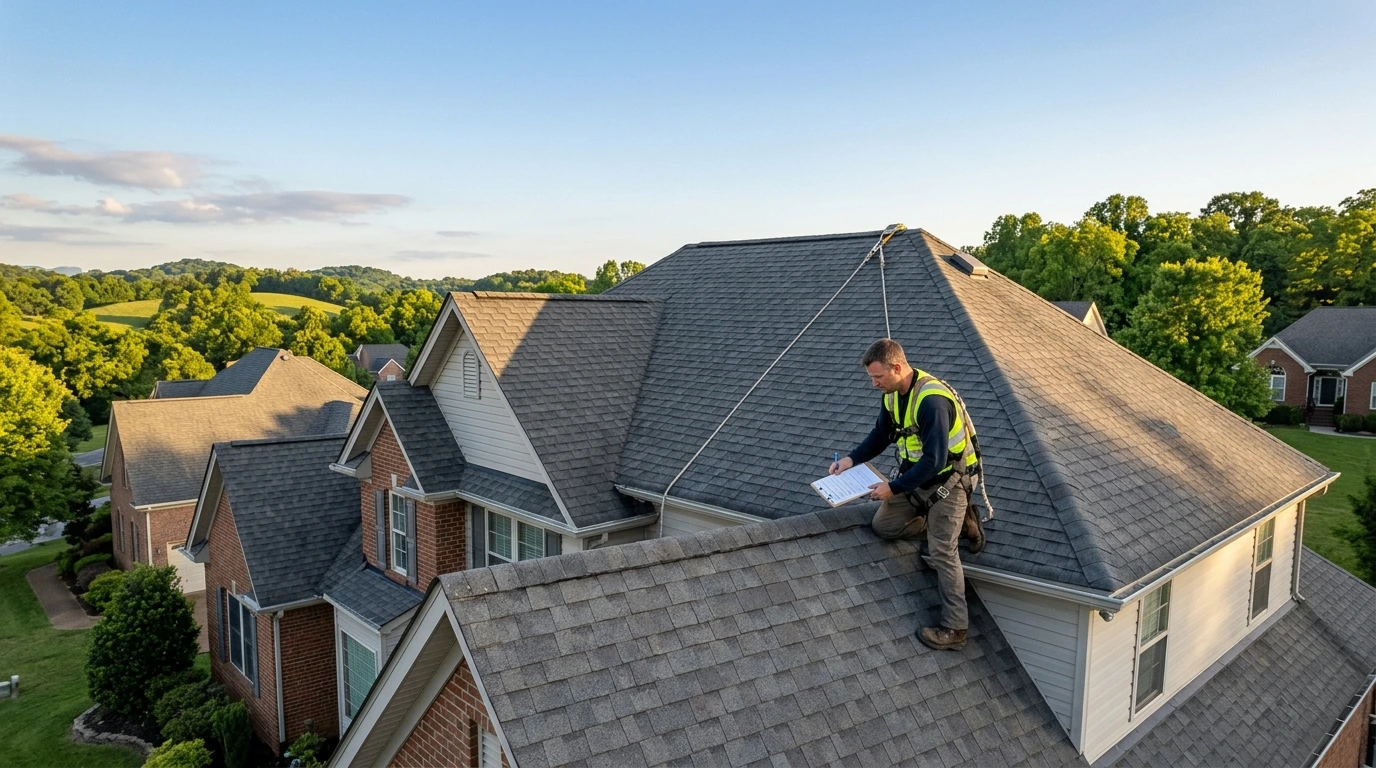
A roof inspection checklist helps you spot small problems before they turn into leaks, mold, and big repair bills. In Tennessee, this matters even more. Our roofs face hail, strong storm winds, ice, and long humid summers. All of that wears down shingles faster than most homeowners expect.
This guide shows you what to check, what each problem means, and when to call a professional. You can finish the first part from the ground in about 20 minutes, no ladder needed.
Why Tennessee Roofs Need Regular Inspections
Middle Tennessee weather is hard on a roof. In spring, storms bring hail and high winds. Summer, heat and UV rays dry out shingles. In fall, leaves clog gutters. Winter, freezing and thawing can crack roofing materials and loosen seals.
The tricky part is that roof damage often looks small from the yard. A few lifted shingles or a thin gap in flashing can let water in for months before you see a stain on the ceiling. By then, the insulation and wood under the roof may already be wet.
A simple checklist lets you catch these early signs while the fix is still small and affordable.
When Should You Inspect Your Roof?
Use this schedule as a guide:
- Twice a year: once in spring to check for winter and storm damage, and once in fall before cold weather arrives.
- After every major storm: hail, tornado warnings, high winds, and ice storms can all cause damage you cannot see right away.
- Before buying or selling a home: a clear picture of roof condition helps you plan and negotiate.
- When your roof is getting older: older roofs need closer attention, even if nothing looks wrong.
Want more detail on timing? Read our guide on how often to schedule a roof inspection in Tennessee.
The National Roofing Contractors Association (NRCA) also recommends having your roof checked at least twice a year, in spring and fall.
Safety First Before You Start
You do not need to climb onto your roof to run through this checklist. In fact, please do not. Falls from roofs cause serious injuries every year, and wet, icy, or steep roofs are especially risky.
Instead:
- Walk around your home and look at the roof from the ground.
- Use binoculars or the zoom on your phone camera for a closer view.
- Check your attic and ceilings from the inside.
- Skip the inspection on wet, windy, or icy days.
If something looks wrong, take photos and call a licensed roofer. They have the training and safety gear to look at it up close.
To learn why roof work is so risky, read the fall protection guidance from OSHA.
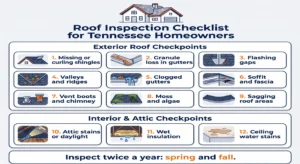
Roof Inspection Checklist (Step by Step)
Work through these items one at a time. Write down anything that looks off and take a photo of it.
-
Missing, cracked, or curling shingles.
Look for gaps in the pattern, shingles with curled edges, or pieces lying in your yard. These are the most common signs of wind damage and aging.
-
Granule loss.
Check your gutters and downspout exits for sand like granules. Shingles lose granules as they wear out, and bald spots leave the roof exposed to sun and rain.
- Flashing is the metal that seals joints around chimneys, skylights, and walls. Look for gaps, rust, or pieces that have lifted. Bad flashing is a top cause of roof leaks.
-
Valleys and ridges.
Valleys are where two roof slopes meet, and water runs through them fast. Look for worn spots, debris, or damaged shingles along valleys and the top ridge line.
-
Gutters and downspouts.
Clogged or sagging gutters push water back onto the roof edge. Look for leaves, loose sections, and signs of overflow.
-
Soffit and fascia.
These are the boards under and along the roof edge. Peeling paint, soft spots, or dark stains can point to moisture problems.
-
Chimney and vent boots.
The rubber seals around vent pipes crack with age. Check them and the chimney base for cracks, gaps, or loose caulk.
-
Moss and algae.
Green or black patches are common in our humid climate. A little algae is mostly cosmetic, but thick moss can hold moisture against the shingles.
-
Sagging areas.
A roof line should look straight. Dips or sagging spots can mean water damage or a problem with the structure underneath.
-
Attic roof deck.
With a flashlight, look at the underside of the roof for dark stains, wet wood, or daylight coming through. Both are signs of a leak or gap.
-
Insulation and moisture.
Damp, matted, or moldy insulation in the attic often means water is getting in somewhere above.
-
Ceilings and walls.
Look for yellow or brown stains, peeling paint, or bubbling on your ceilings and upper walls. Also check that your attic can breathe. Poor airflow traps heat and moisture. Learn more in our guide to attic ventilation in Columbia, TN.
What to Look For and How Urgent It Is
Not every problem needs a same day call. Use this table to decide how fast to act.
| Problem | What You See | How Urgent |
| Missing shingles | Bare spots or shingles in the yard | High. Water can get in right away. |
| Flashing gap | Lifted or rusted metal near chimney or vents | High. A common source of leaks. |
| Ceiling stain | Yellow or brown spots, peeling paint | High. Active or recent leak. |
| Sagging roof line | Dips or uneven areas | Very high. Call a roofer right away. |
| Granule loss | Sand like bits in gutters | Medium. Sign of an aging roof. |
| Moss or algae | Green or dark patches | Low to medium. Watch it and clean it. |
When in doubt, treat anything involving water, sagging, or missing materials as urgent.
Tennessee Problems to Watch For
Some issues show up more often in our part of the state.
Hail damage. Hail can bruise shingles and knock off granules without leaving obvious holes. Look for dents in metal vents, gutters, and flashing, since these often show damage first. Our guides on how to identify hail damage on a roof and hail damage signs in Columbia, TN explain what to look for.
Ice storm and freeze damage. When water freezes and thaws again and again, it can lift shingles and crack seals. After an ice storm, check for leaks in your attic and along exterior walls. See our post on roof leaks after an ice storm in Tennessee.
Leak or condensation? Not every wet spot in the attic is a roof leak. Humid air can condense on cold surfaces and cause similar stains. Our guide on roof leak vs attic condensation helps you tell the difference.
Keep an eye on the forecast and severe weather alerts from the National Weather Service in Nashville. After a big storm, FEMA also offers tips for protecting your home from storm damage.
DIY Check vs Professional Roof Inspection
A homeowner checklist is a great first step, but it has limits. From the ground, you cannot see every shingle, every seam, or the condition of the roof deck.
Here is how the two compare:
- Your checklist: good for catching obvious damage, saving money, and building a habit of regular checks.
- A professional inspection: a trained roofer checks the whole roof up close, finds hidden damage, documents it with photos, and gives you clear repair options.
A professional visit is especially smart after a big storm, before you file an insurance claim, or if your roof is more than 15 years old. Learn more about our yearly roof inspection service, and see how much a roof inspection costs so you know what to expect.
What to Do After You Find Damage
If your checklist turns up a problem, stay calm and take these steps:
- Take clear photos. Capture the damage and the date. This helps with repairs and insurance.
- Protect your home. If there is an active leak, move belongings, place a bucket, and call a roofer about a temporary tarp.
- Call a licensed local roofer. Get a written inspection report and repair options.
- Check your insurance. If the damage came from a storm, read our guide on roof storm damage insurance claims.
- Decide on repair or replacement. Small, local damage can often be repaired. Widespread wear may call for a new roof. Read about roof repair in Columbia, TN and the signs you should not ignore when it comes to roof replacement.
Own a commercial building instead? Use our commercial roof inspection checklist for Tennessee property managers. For year round upkeep, see our roof maintenance tips for Columbia, TN.
Frequently Asked Questions
How often should I use a roof inspection checklist?
Twice a year is a good rule, once in spring and once in fall. Also run through it after any major storm with hail, high winds, or ice.
Can I inspect my own roof?
You can check a lot from the ground and from inside your attic. For safety, do not walk on the roof yourself. Leave close up inspection to a trained professional.
What do roof inspectors look for?
They check shingles, flashing, vents, valleys, gutters, and the roof deck. They also look for signs of water damage, poor ventilation, and storm damage that is hard to see from the ground.
How long does a roof inspection take?
Most home roof inspections take around 30 to 60 minutes, depending on the size and condition of the roof.
Does homeowners insurance cover roof inspections?
Insurance usually does not pay for routine inspections. It may cover repairs when damage comes from a covered event like a storm. Check your policy or ask your agent for the details.
When should I replace my roof instead of repair it?
If damage is small and local, a repair may be enough. If the roof is near the end of its life, or damage is widespread, replacement is often the smarter long term choice. An inspection report will help you decide.
Is a roof inspection free in Tennessee?
It depends on the company. Veteran Roofing Systems offers free roof inspections to homeowners in Middle Tennessee.
Schedule a Free Roof Inspection
Your checklist is the first step. A professional inspection gives you the full picture. Veteran Roofing Systems is a veteran owned roofing company serving Columbia and Middle Tennessee. We will check your whole roof, show you photos of what we find, and explain your options with no pressure.
Schedule your free inspection or call us today.
Veteran Roofing Systems 1501 Carmack Blvd A, Columbia, TN 38401 Phone: (931) 225-9987
How Much Does a Roof Inspection Cost in TN? (And When It’s Free)
Most homeowners pay about $150 to $400 for a professional roof inspection in 2026. Across the country, the average sits […]
Read More… from How Much Does a Roof Inspection Cost in TN? (And When It’s Free)

How Tennessee Storms Affect Roof Lifespan
How Tennessee Storms Affect Roof Lifespan: What Homeowners Need to Know? Tennessee is famous for its rolling hills, warm summers, […]
